 CanadaCAD
 United StatesUSD
 United KingdomGBP
 AustraliaAUD
 EuropeEUR
 Global—
Buying Guide


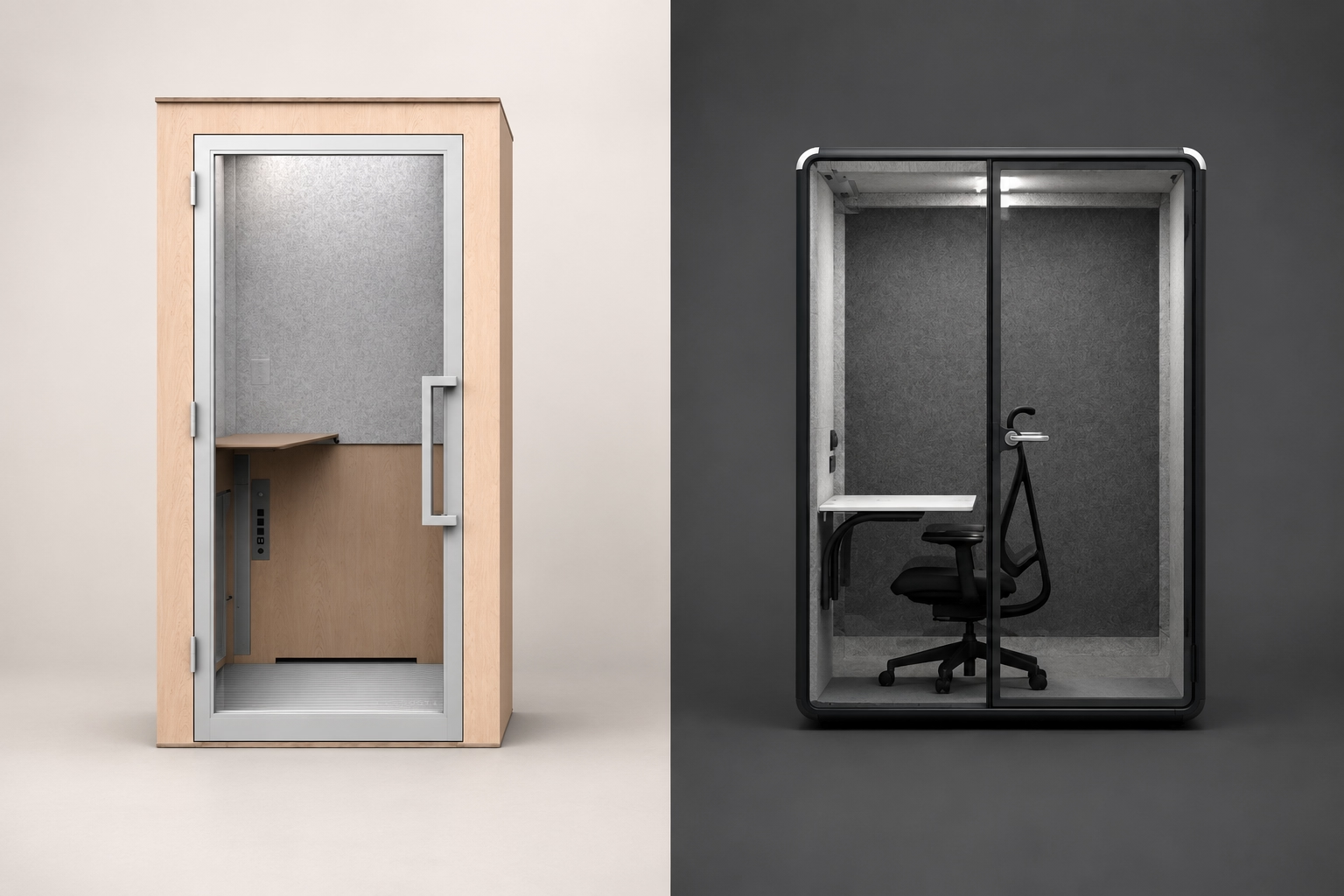
Zenbooth and Bureau usually end up on the same shortlist for a simple reason: both promise serious soundproofing at a more accessible price than the premium end of the market. But they get there in very different ways. Zenbooth is a small-catalog manufacturer with four booth models sold in the US and Canada. Bureau is a certification-led manufacturer with 10 booth configurations sold across Canada, the US, the UK, Europe, and Australia.
The short answer: Zenbooth’s appeal is its sticker price on single-person booths, though that price buys a booth without seating. Bureau is the stronger choice on everything a workplace buyer actually has to sign off on: independently certified acoustic performance, a full range from single-person booths to 6-person meeting rooms, complete furniture included as standard, health and safety credentials your facilities team can put in a procurement file, and the same booth standard across offices in more than one country.
What sizes are available for Zenbooth and Bureau office booths?
Zenbooth offers the following range of sizes available:
- Zenbooth Solo (1-person booth)
- Zenbooth Solo Pro (1-person premium booth)
- Zenbooth Duo (2-person booth)
- Zenbooth Quad (4+ person meeting room, ADA configuration available)
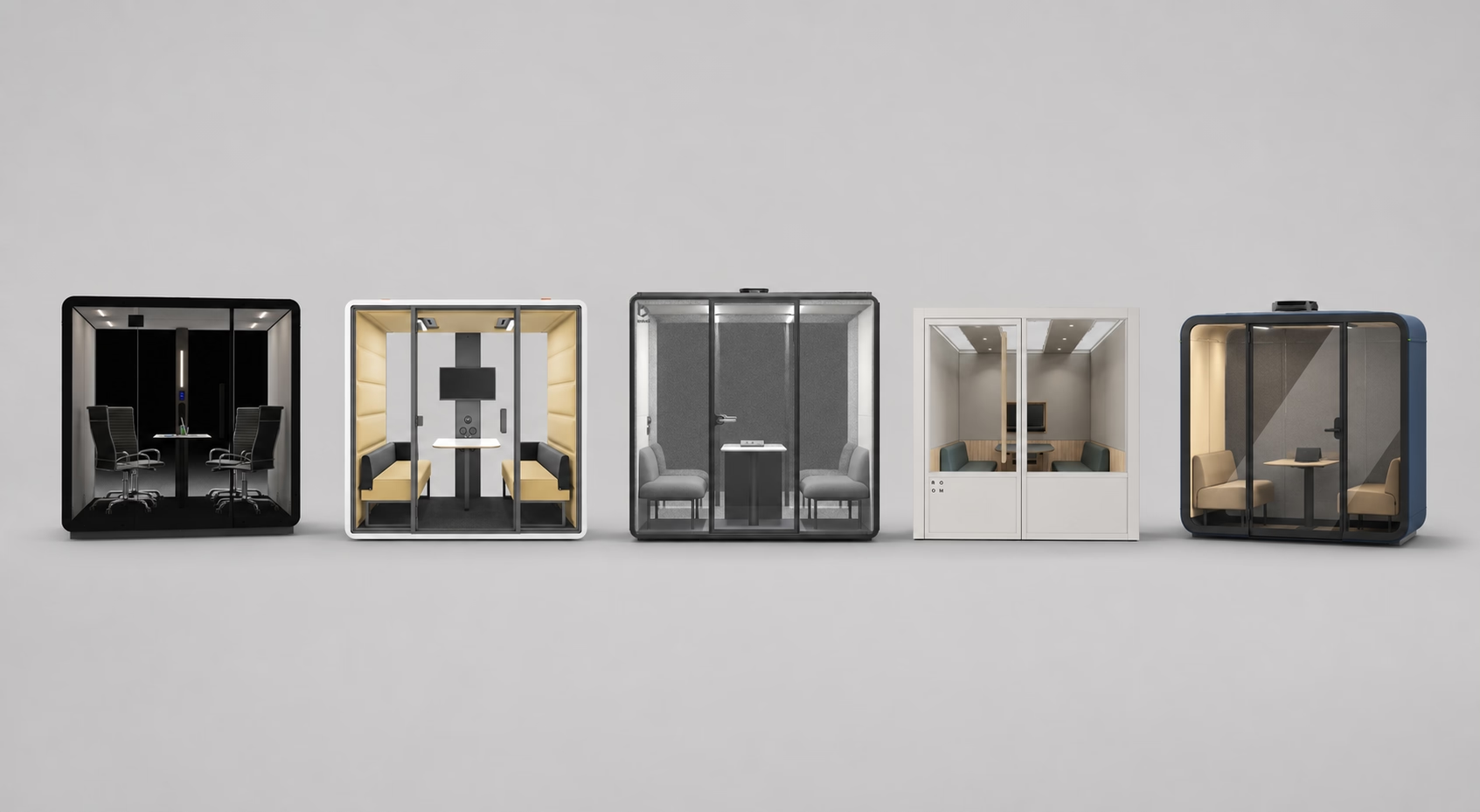
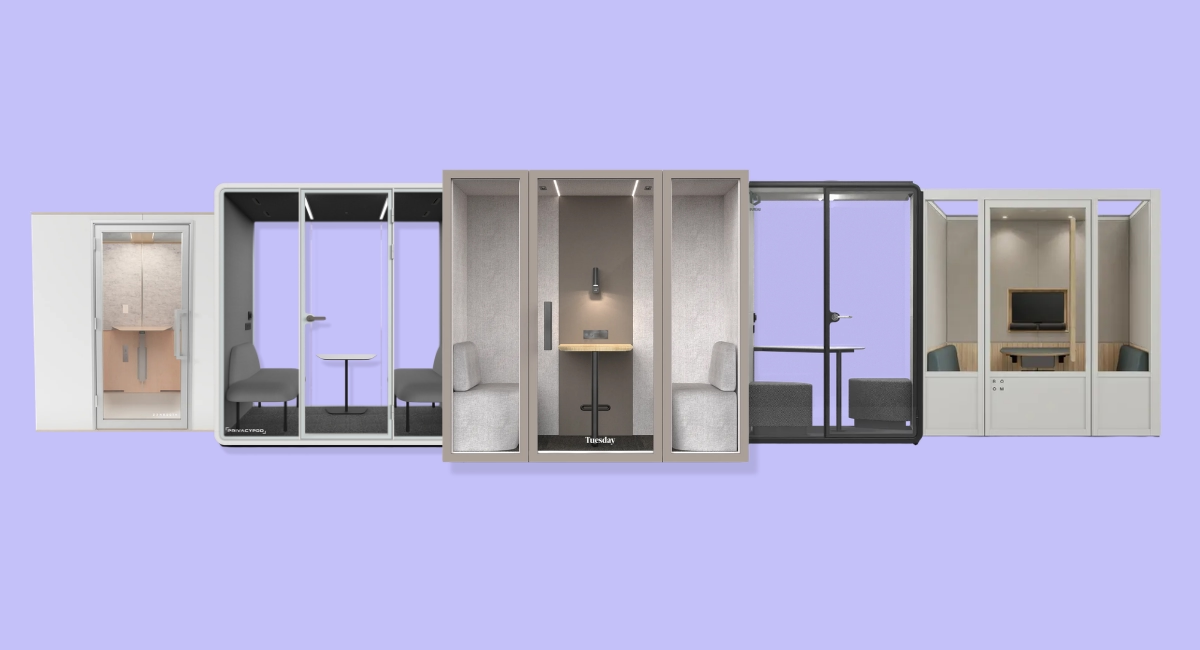
Bureau offers a wider range of 10 sizes and configurations to meet diverse office needs, from single-person booths for focused work to larger multi-person setups ideal for collaborative meetings:
- Bureau One Stand (1-person booth)
- Bureau One Solo (1-person booth)
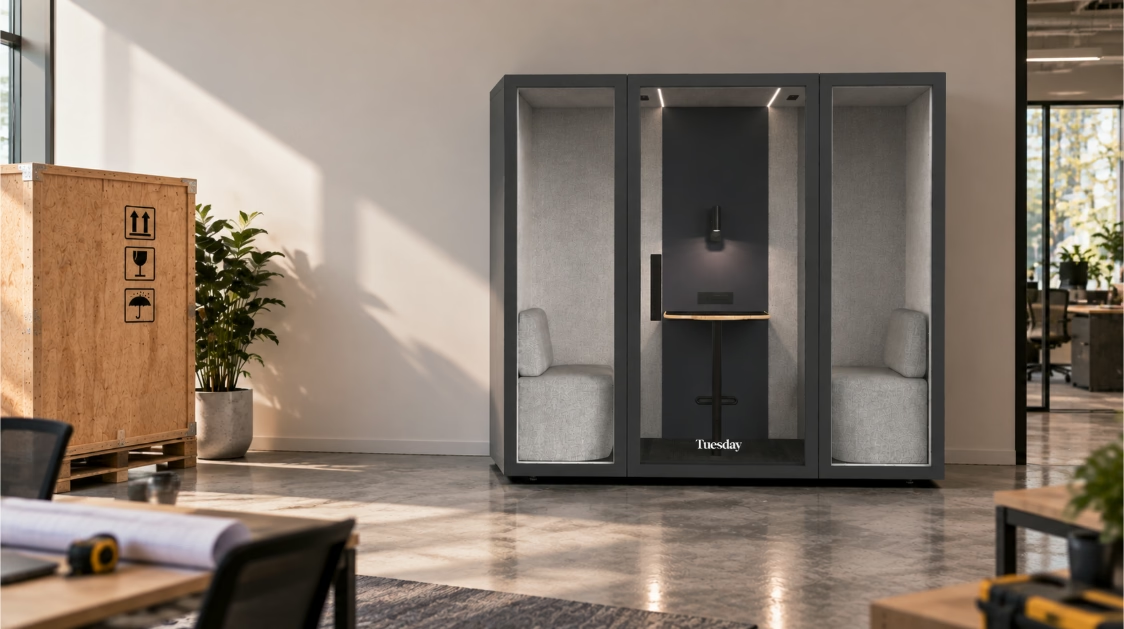
- Tuesday (1-person booth)
- Bureau One+ Focus (1-person booth)
- Bureau One+ Meet (up to 2 people)
- Tuesday+ (up to 2 people)
- Bureau Quad Meet (up to 4 people)
- Bureau Quad+ Meet (up to 4 people)
- Bureau Quad+ Focus ( 1-person booth)
- Bureau Team Meet (up to 6 people)
Zenbooth’s range tops out at its 4-person Quad, while Bureau extends to a 6-person Team Meet. For workplaces that need larger meeting spaces or want to standardize on a single booth brand across every team size, Bureau offers nearly three times the configurations.
Where Zenbooth genuinely shines
A useful comparison starts with what the other brand does well, so here is Zenbooth’s honest case.
Zenbooth builds its booths with renewable materials and plants a tree for every booth sold. Its Solo is one of the more affordable quality single-person booths on the North American market at $5,490. Zenbooth also offers an electric height-adjustable desk inside the booth, a skylight ceiling, occupancy-sensor lighting, and a 30-day money-back guarantee, and standard orders ship within 30 days with a rush option.
Those are real strengths. But they sit on top of a product with meaningful gaps once your requirements go beyond a phone booth, and that is where the comparison turns.
The acoustic verification gap
Both brands insulate well. The difference is proof.
Bureau publishes independently certified acoustic ratings across its range. The Signature 2.0 series delivers up to 30dB noise reduction backed by ISO 23351-1 Class A certification, and the Tuesday series achieves up to 29dB. Those are numbers a facilities manager can cite in a procurement document or an acoustician can check against a floor plan.
Zenbooth describes layered acoustic insulation and its Cocoon panel system, and third-party listings cite noise reduction of up to 30dB for the Solo Pro. But Zenbooth does not publish independently certified acoustic ratings for its lineup. For a personal purchase that may not matter. For a workplace buying booths so employees can hold confidential HR conversations or client calls, uncertified acoustics is a real gap.
Certifications: one line vs a portfolio
Zenbooth booths are ETL certified to UL 962, which covers North American electrical compliance and permitting. That is the Zenbooth publishes two certifications: ETL certification to UL 962, covering North American electrical compliance and permitting, and Intertek Clean Air Gold, which verifies its booths as low-emitting products tested for VOCs. Both are meaningful credentials, and the Clean Air Gold distinction is genuinely uncommon in the category.
Bureau matches both categories and treats certification as the product. The portfolio covers acoustics, air quality, fire, electrical, sustainability, and seismic safety:
- ISO 23351-1 Class A, approximately 30dB speech level reduction, independently lab-tested.
- UL GREENGUARD Gold and GB/T 18883 (TVOC indoor air quality)
- BIFMA Compliant
- ASTM E084 and CSA/ULC-S102 (flame spread, US and Canada)
- Engineered seismic bracing
- UL 962 tested by SGS (an OSHA-recognised NRTL) and CSA C22.2 No.61010-1-2012
- CE and UKCA (Europe and UK), AS/NZS 3000 and RCM (Australia and New Zealand)
- ISO 14067:2018 (carbon footprint) and ISO 14001 (responsible manufacturing)
The difference shows most clearly on air quality itself. Zenbooth’s Clean Air Gold certifies low emissions. Bureau holds the equivalent low-emissions credential in GREENGUARD Gold and BIFMA, adds TVOC testing, and then goes a level further: Bureau is the world’s only soundproof booth company to hold Works with WELL licensing, an independent verification that every booth supports occupant health holistically across air quality, light, and acoustic comfort, not emissions alone.
Availability: one market vs four
Zenbooth serves the United States and Canada, with contiguous US pricing published and shipping quoted separately per booth.
Bureau ships and certifies for Canada, the US, the UK, Europe, and Australia, with the regional electrical and fire credentials each market requires. A company with offices in Toronto, London, and Sydney can put the identical booth in all three. With Zenbooth, only one of those offices gets a booth at all.
Furniture: included vs bring your own
This is one of the most practical differences between the two brands, and one of the easiest to miss on a spec sheet.
Zenbooth does not sell furniture with any of its booths. The Solo and Duo come with a fixed desk shelf built in at standing height, with an electric adjustable desk available as a paid upgrade, and Zenbooth recommends buying bar-height stools separately. The Quad, its 4-person meeting pod, ships with no furniture at all; the buyer sources their own conference table and chairs.
Every Bureau configuration comes with purpose-built furniture included. The Tuesday and One series include integrated desks and comfortable seating, meeting configurations like the Quad Meet and Team Meet include tables and bench seating designed for the space, and the furniture is part of the booth’s engineering rather than an afterthought, sized to the interior, cable-managed, and covered by the same warranty.
The practical difference: a Bureau booth is ready to use the day it is installed. A Zenbooth needs a second procurement exercise before anyone can sit down.
What about price? The comparison is not apples to apples
On sticker price, Zenbooth’s Solo at $5,490 looks about $2,000 cheaper than Bureau’s Tuesday at $7,499. But the two booths are not equipped the same way, and the gap closes quickly once they are.
The Solo’s standard configuration is a fixed desk at standing height, with no seating included. Zenbooth suggests pairing it with bar-height stools, purchased separately. To work seated or standing comfortably, you need the electric adjustable desk upgrade at $400, and shipping adds another $650 per booth in the contiguous US. Configured for actual seated work, a Solo lands around $6,540 delivered, and you are still sourcing your own chair.
The Tuesday’s $7,499 includes comfortable bench seating and a built-in desk as standard, ready to work in the moment it is installed. It also includes what no Zenbooth configuration offers at any price: a certified 29dB acoustic rating (ASTM E596), WELL-licensed health verification, fire certification, a 5-year warranty against Zenbooth’s 3, and the option to standardize across four global markets as you grow.
For a fully equipped, sit-down single-person booth, the real-world price difference is a few hundred dollars, not two thousand. What that difference buys is the certification portfolio.
At the larger end the sticker gap narrows too, and the furniture gap widens. Zenbooth’s 4-person Quad starts at $16,490 and ships unfurnished, so the real cost includes a conference table and four chairs on top. Bureau’s Quad Meet at $17,999 arrives with its table and seating included, and beyond four people Bureau is the only option, with the Team Meet at $24,999.
The bottom line
Zenbooth makes a decent phone booth. Bureau is workplace infrastructure: certified, health-verified, available in 10 configurations across four global markets, and built for companies that will still be adding booths three offices from now. For a purchase your team will use every day for years, verified performance is the difference worth paying for.
Browse the full Bureau range here, or book a showroom visit and hear the difference certified acoustics make in person.
FAQ’s
Is Zenbooth cheaper than Bureau?
On sticker price only. Zenbooth’s Solo starts at $5,490 but includes no seating and has a fixed standing-height desk; adding the adjustable desk ($400) and shipping ($650) brings a seated-work configuration to roughly $6,540 plus a separately purchased chair. Bureau’s Tuesday at $7,499 includes bench seating, a built-in desk, certified 29dB acoustics, and a 5-year warranty as standard. At the 4-person size the prices converge ($16,490 vs $17,999), and Bureau is the only brand of the two offering 6-person booths.
Which is more soundproof, Bureau or Zenbooth?
Bureau publishes independently certified ratings from SGS at ISO 23351-1 A: up to 30dB noise reduction for the Signature 2.0 series and up to 29dB for the Tuesday series. Zenbooth does not publish certified acoustic ratings; third-party listings cite up to 30dB for the Solo Pro. If verified acoustic performance matters for your purchase, Bureau is the safer choice.
Can I buy Zenbooth or Bureau booths outside North America?
Zenbooth serves the US and Canada only. Bureau serves Canada, the US, the UK, Europe, and Australia, with regional electrical and fire certifications for each market.
How many people fit in Zenbooth and Bureau booths?
Zenbooth’s largest model, the Quad, fits 4 people. Bureau’s range extends to the 6-person Team Meet, with 10 configurations in total.
Are Zenbooth and Bureau booths made sustainably?
Zenbooth uses renewable materials and runs a tree-planting program tied to each booth sold. Bureau holds ISO 14001 responsible manufacturing certification and ISO 14067:2018 carbon footprint certification, giving buyers audited sustainability credentials rather than program-based ones.
What certifications does Bureau have that Zenbooth does not?
Bureau holds certified acoustic ratings (ISO 23351-1, ASTM E596, ASTM E336-07), Works with WELL licensing, fire certifications (ASTM E084, CSA/ULC-S102), UL GREENGUARD Gold for the Signature Series 2.0 and BIFMA for the Tuesday Series seismic bracing engineering, TVOC air quality testing, and regional electrical certifications for the UK, Europe, Australia, and New Zealand. Zenbooth’s published certification is ETL to UL 962.
Do Zenbooth and Bureau booths come with furniture?
Bureau booths include purpose-built furniture as standard in every configuration, from the Tuesday’s integrated desk and bench seating to the tables and seating in the Quad Meet and Team Meet. Zenbooth does not sell furniture with any booth: the Solo and Duo have a built-in fixed desk shelf with an adjustable desk as a paid upgrade, seating is purchased separately, and the 4-person Quad ships unfurnished.
Can Bureau booths be moved after installation?
Yes. Bureau booths are non-permanent and can be relocated, added, or removed as your office changes, with no disassembly required for relocation.
What warranty do Bureau and Zenbooth booths come with?
Bureau booths come with a 5-year warranty, covering the booth and its integrated furniture. Zenbooth offers a 3-year warranty on its booths. Over a typical booth lifespan, Bureau’s warranty covers two additional years of daily workplace use.
Share article with your community!


Buying Guide