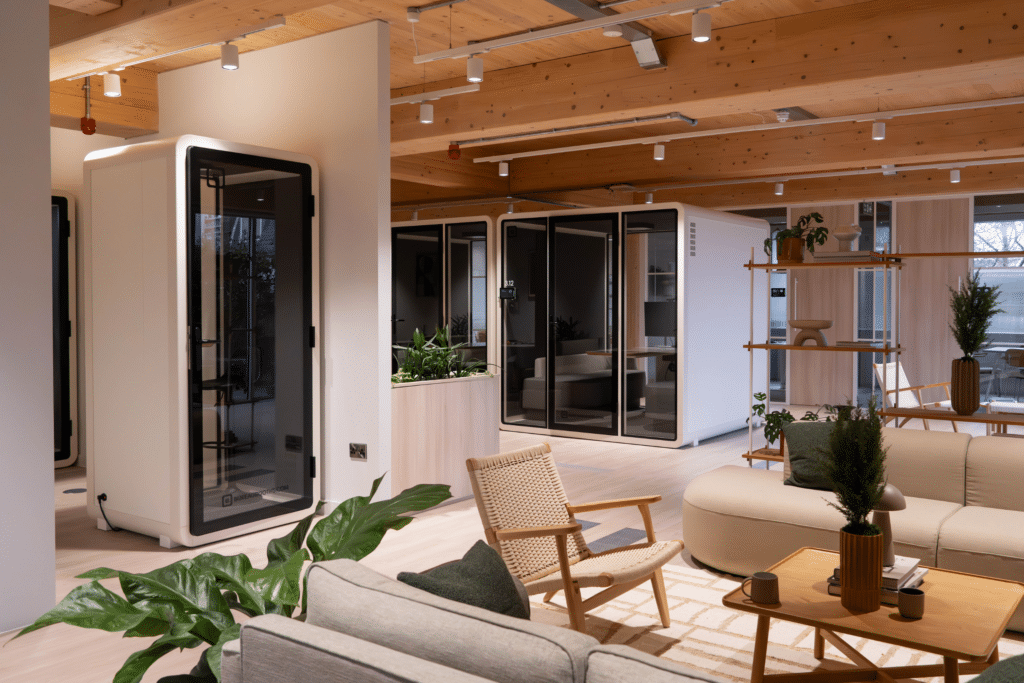
Indoor Air Quality (IAQ) refers to the condition of air within a space, including ventilation, airborne contaminants, and material emissions. It is influenced by both airflow and the materials used within an environment. Good IAQ supports comfort, health, and usability, especially in enclosed or frequently occupied spaces.
Why Indoor Air Quality Matters in Enclosed Workspaces
IAQ plays a critical role in how comfortable and usable a space feels over time. While it is often associated with ventilation and airflow, IAQ is equally shaped by the materials within a space. Surfaces, finishes, and adhesives can all release emissions that impact air quality, even in environments with strong airflow. This means that simply moving air is not enough to ensure a healthy and comfortable environment.
In enclosed or semi-enclosed spaces, these factors become even more important. Air must be continuously circulated to prevent buildup of heat, carbon dioxide, and other airborne elements, while materials must be carefully selected to minimize emissions. These spaces are not isolated systems, but part of a larger building environment, relying on both internal airflow and the base HVAC system to maintain air quality. When designed effectively, IAQ supports focus, comfort, and overall wellbeing, allowing people to use a space for extended periods without discomfort. Taking a balanced approach to both ventilation and material selection ensures that air quality aligns with real-world expectations.
Related Terms
Featured Resources
-

A New Global Standard: Bureau is the First Soundproof Booth Company to Earn ‘Works with WELL’
The workplace industry just reached a turning point. Bureau is proud to announce that we are…
-

Unlock Peak Performance: How Smart Booth Sensors Optimize Your Workspace
Are Your Office Pods Working as Hard as You Are? In today’s dynamic work environment, modular…
-

Creating a Sensory Haven: How Bureau Supports Neurodiversity and Regulation in Childcare
About the Childcare Center Operating a bustling childcare center requires a delicate balance of high energy…