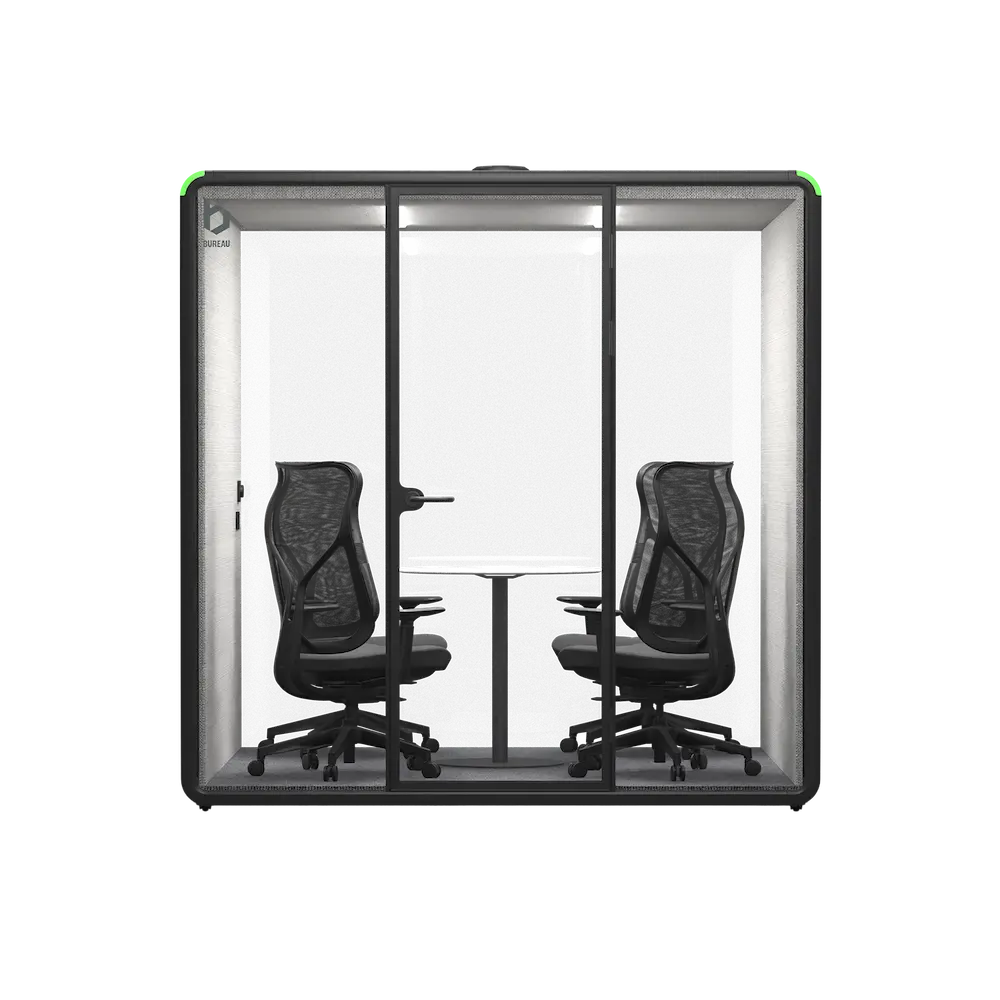
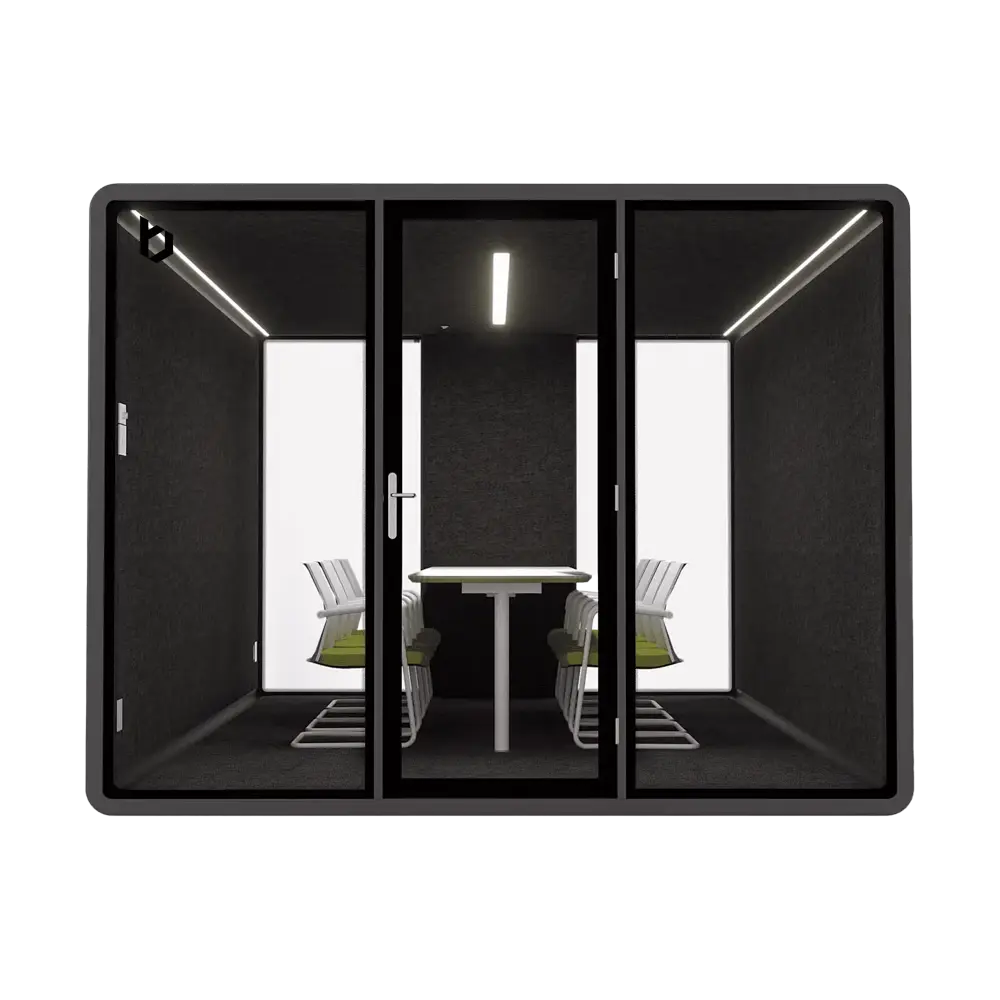
Noise Reduction Coefficient (NRC) measures how much sound a material absorbs within a space, rated from 0 to 1. Higher NRC materials reduce echo and noise buildup, improving clarity and comfort. It does not block sound between spaces, but instead controls how sound behaves within an environment.
Why NRC Matters for Internal Acoustic Comfort
NRC is a key metric for understanding how sound behaves within a space. It measures how much sound is absorbed by a material rather than reflected back into the environment. In spaces with low absorption, sound reflects off hard surfaces and builds over time, creating echo, increasing background noise, and reducing speech clarity. High NRC materials help manage this by absorbing sound energy, resulting in a quieter and more comfortable environment.
This is why NRC is commonly used in open-plan offices and shared environments, where controlling internal noise is essential for focus and productivity. However, NRC is often misunderstood as a measure of soundproofing. While it improves how sound is experienced within a space, it does not prevent sound from travelling between areas. For enclosed environments, absorption is only one part of the equation. Internal materials can improve clarity and reduce echo, but overall acoustic performance depends on how the entire structure manages sound. Understanding this distinction helps set the right expectations, focusing on both internal comfort and how sound interacts with the surrounding environment.
Related Terms
Featured Resources
-

A New Global Standard: Bureau is the First Soundproof Booth Company to Earn ‘Works with WELL’
The workplace industry just reached a turning point. Bureau is proud to announce that we are…
-

Unlock Peak Performance: How Smart Booth Sensors Optimize Your Workspace
Are Your Office Pods Working as Hard as You Are? In today’s dynamic work environment, modular…
-

Creating a Sensory Haven: How Bureau Supports Neurodiversity and Regulation in Childcare
About the Childcare Center Operating a bustling childcare center requires a delicate balance of high energy…