 CanadaCAD
 United StatesUSD
 United KingdomGBP
 AustraliaAUD
 EuropeEUR
 Global—
Deskside


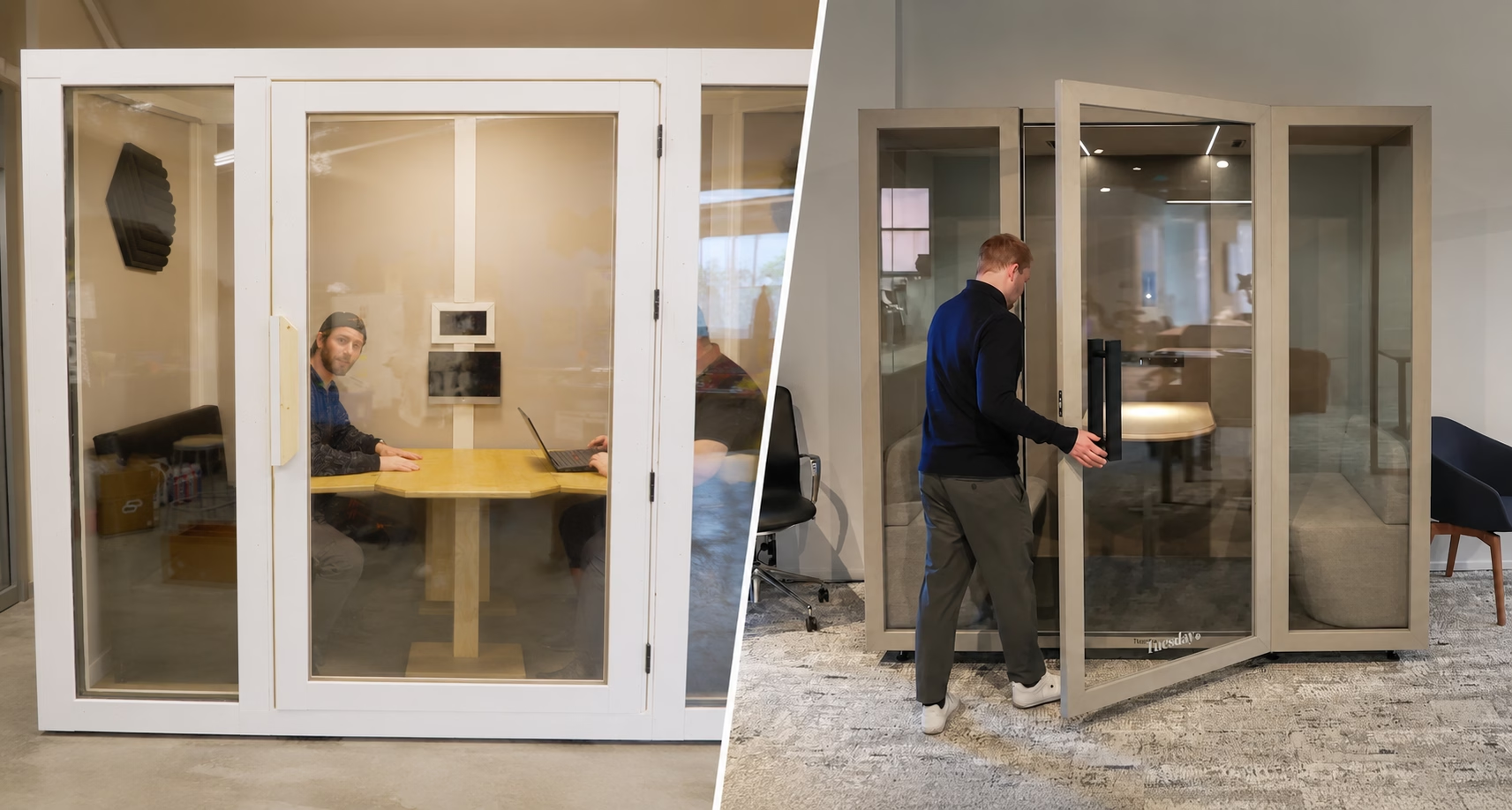
Linus Tech Tips spent roughly 176 hours and $4,000 building a two-person meeting pod that reached about 30 decibels of sound reduction, putting it in the same ballpark as the commercial pods that inspired it. Linus called the result a “Pyrrhic victory.” Here’s why we loved every minute of it.
How Hard Can It Be?
A YouTube video landed in the Bureau inbox and promptly derailed the afternoon. One of our customers decided to build their own office pod and documented every discovery along the way.
Linus Wanted a New Office Booth
They did it.
Linus Tech Tips built a two-person meeting pod. It looks good. It works. People will use it. The sound reduction came in at roughly 30 decibels, putting it firmly in the same ballpark as the commercial pods that inspired the experiment. The team spent around $4,000 on materials and 176 hours in the workshop getting there.
A good pod performs a radical social function. It gives people somewhere to disappear; to finish a thought before somebody turns it into a meeting. Somewhere to have a difficult conversation, a video call, a moment of concentration, or a brief reunion with their own brain. Every office claims to value collaboration. Every successful office eventually develops a queue for privacy. Close the door, the light comes on, the air moves, the noise falls away, and the entire workplace becomes more manageable.
At Linus Tech Tips, that queue had become wonderfully specific. Existing pods were busy, and the meeting space was tight. One office had acquired a second identity as “Call Room 104B.” The problem already had a solution: they owned Bureau pods and used them constantly. Linus Sebastian knew he needed another. Then he looked at the invoice.
“Seven grand for what? An upholstered phone booth?”
What It Actually Takes to Build a Soundproof Pod
Every successful product eventually gives rise to the same dangerous thought. Somebody looks at a Negroni and starts infusing their own vermouth. Somebody buys a Leica and immediately starts reading forums about lens coatings. Somebody sits in a Bureau booth and begins mentally itemizing every panel, hinge, and gasket.
Presented with a finished object, Linus didn’t see a product. He saw an unresolved investigation.
His video opens during this glorious phase. The drawings make sense, and so do the dimensions. The plywood is stacked neatly against the wall. There’s a plan. For a brief and glorious period, the future appears entirely cooperative. The pod looks like a room. A small room, certainly, though still recognizably a room. Then the plywood develops opinions.
A frame arrives, triggering a conversation with tolerances. Then comes acoustics. Glazing carries its own strong opinions. Ventilation enters from the side and demands attention. Every solution raises another question. And every answer reveals another layer.
One exchange deserves preserving for posterity.
“This is exactly how the Egyptians built the pyramids.”
“Yeah. With a table saw.”
What begins as a straightforward construction exercise slowly acquires the scale and emotional intensity of a tiny civil-engineering epic. Sheets of Sonopan move into the walls. Acrylic windows become sandwiches. Fabric meets spray glue and an iron. A bench appears. A door comes together. Electrical systems enter the story. The pod keeps revealing itself, layer by layer.
Why This Felt Familiar: Bureau’s Own Origin
Watching the build felt familiar to us at Bureau. Years ago, Reuben Zuidhof and Scot Sustad started pulling on the same thread. Their version began with overcrowded offices and a shortage of quiet. The thread led through acoustics, airflow, ergonomics, behavior, and hundreds of prototypes. Eventually, it became Bureau.
Curiosity has always had a workshop. The Homebrew Computer Club was full of people who wanted to understand computers deeply enough to build their own. Early mountain-bike pioneers looked at road bikes and decided there had to be another way down a hill. Amateur aviators spent decades assembling aircraft in garages and barns because flight was too fascinating to leave to professionals.
Watching Linus and his team work through the same discoveries felt a little like watching a made-for-YouTube adaptation of Bureau’s origin story.
The Hidden Decisions Inside an Office Pod
Every designer knows the feeling. You encounter an object and stop seeing it. A chair becomes joinery. A watch becomes tolerances. A building becomes systems. Curiosity peels away the finished surface and starts hunting for decisions. The Linus team applied that instinct to the meeting pods they already couldn’t live without.
The reveal is wonderful. Linus steps inside and immediately notices the things that matter in daily use: privacy, comfort, table depth, screen sharing, airflow, and the feeling that work becomes easier when a small room exists exactly where it is needed. Then a bathroom fan steals the scene. After all, every workshop project deserves one perfectly improvised detail.
By the end, the pod stands complete. Then comes the figure that quietly takes over the film: 176 hours.
That number contains evenings, revisions, re-cuts, design changes, hardware-store runs, new ideas, better ideas, occasional swearing, and the peculiar satisfaction of solving a problem nobody asked you to solve. The pod spent 176 hours introducing itself. What began as an upholstered phone booth slowly unfolded into acoustics, airflow, structure, ergonomics, materials, and hundreds of decisions.
Linus arrives at the conclusion with refreshing honesty. The economics became what he called a “Pyrrhic victory.”
That honesty is what makes the film so likable. It celebrates making. It celebrates curiosity. It celebrates the peculiar joy of dismantling a finished object simply to understand how it thinks. Some teams will watch the video and order a pod. Others will watch it, clear a bench, and start pricing plywood.
At Bureau, this was exactly the sort of customer video that would stop work. A finished commercial object had met a workshop full of bright, funny, stubborn people. For 176 hours, a calm little room stopped behaving like a product and started behaving like a puzzle. By the end, the puzzle was solved. The room stood finished. The hidden decisions were visible. The respect had deepened.
Which brings us back to the first question.
Would you DIY your office booth?
Build or Buy? The Real Question Is Which Brand
If you’d rather skip the 176 hours, the real choice isn’t whether to build or buy. It’s which brand. Our Bureau vs Framery comparison break down range, certifications, and acoustics side by side. Still scoping the field? Our roundup of the best 1 person office pods covers the full lineup.
Share article with your community!


Deskside