 CanadaCAD
 United StatesUSD
 United KingdomGBP
 AustraliaAUD
 EuropeEUR
 Global—
Productivity


Arriving early feels like getting away with something.
The office is quieter than it will be later. Fewer people, fewer screens, fewer distractions. You sit down, open the work you’ve been circling all week (the one that requires thinking), and it moves.
You don’t reread the same paragraph and don’t stop to check what it meant two lines ago. One decision leads to the next. For a while, the work holds.
What Actually Breaks Focus
09:10 – The room begins to fill.
Someone rolls back. A nearby call is just quiet enough to ignore, but easy to follow if you let it. Messages appear in the corner of the screen. You glance, then return.
The work is still there. What changes is how often you have to step back into it.
This is where most productivity advice loses the thread, shifting our focus away from what truly disrupts work.
Watch any morning closely, and the pattern is hard to miss: attention moves every few minutes, and more than half of focused stretches are interrupted before they reach a natural stopping point. It can take more than twenty minutes to properly return to a task after an interruption.
In a working day where something pulls at your attention every few minutes, that return never fully completes.
You keep moving. The work just doesn’t carry.
The Cognitive Cost of Switching Tasks
When you switch tasks, attention lingers on the last one, reducing how much of the next you can hold. Often, you’re working on one thing while partly occupied with another.
You feel it as hesitation, rereading. As starting again from slightly behind where you were.
From the outside, everything looks active. Inside, nothing is fully connected.
Morning routines seem effective because they reduce how often this happens.
Why the Office Environment Matters More Than Routine
Patterns of work show that longer, more sustained periods of concentration often appear later in the day, when interruptions ease.
People adjust to their environment without necessarily naming it. The advantage isn’t measured in time. It’s about whether the work can continue without being broken apart.
The office plays a larger role in that than most routines ever will.
How Office Design Disrupts or Supports Work
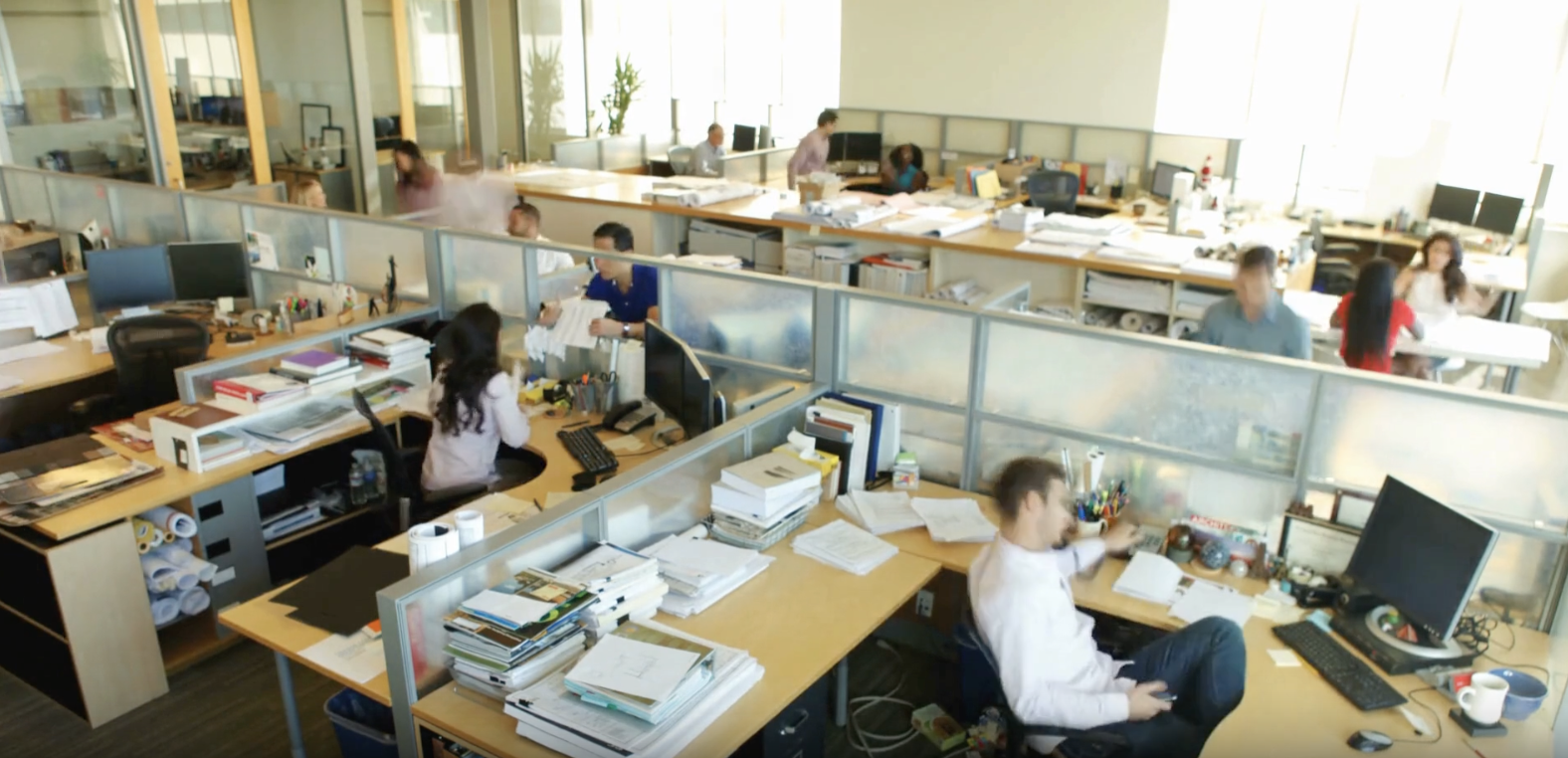
Changes to workspace design have shown that when visibility increases, interaction shifts.
In open-plan offices:
- Face-to-face interaction drops
- Email and instant messaging increased.
- Interruptions become smaller but more frequent
Responsiveness becomes visible to an untrained eye. Fast replies register as engagement. Meanwhile, delayed replies can be read as “absence”.
The Hidden Factors: Noise and Air Quality
Even modest, erratic noise chips away at complex work. It doesn’t need to be loud; just unpredictable.
Studies show performance drops of up to 66 percent. And not because sound takes over, but because it holds a slice of your attention hostage, leaving less of you for the task.
Indoor air quality does the same, but in silence. As CO₂ levels rise during the day, often passing 1,000 ppm in occupied offices, decision-making performance begins to shift. Improved ventilation reduces pollutants and improves cognitive performance.
None of these factors announces itself. There’s no moment where you notice the air getting heavier or the noise tipping you off track. They accumulate until the work starts to feel harder to hold on to.
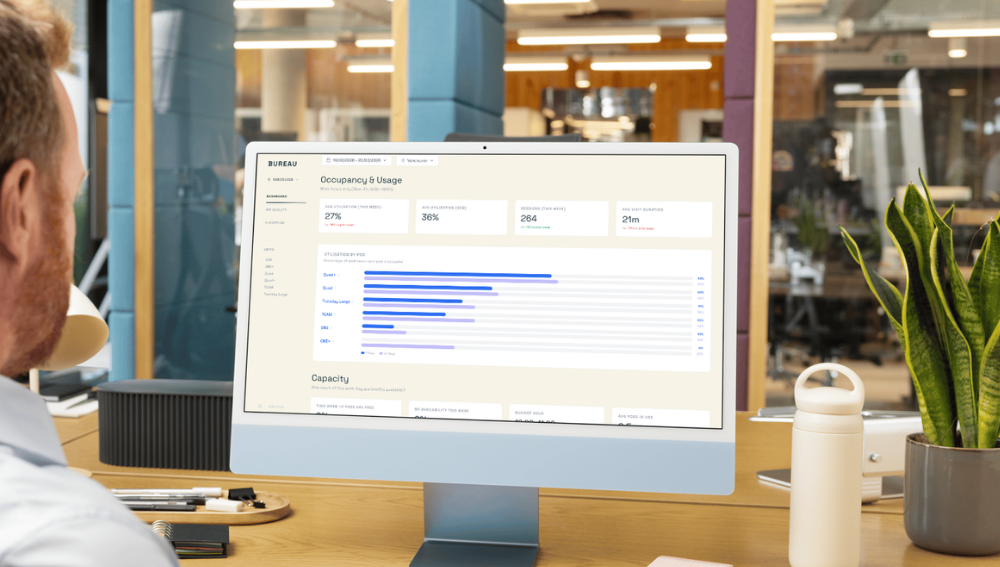
And increasingly, they can be measured in real time. Smart workplace tools are now able to track noise levels, occupancy, and air quality continuously, helping teams understand how their environment is actually performing. If you want to go deeper on that, we break it down here.
Rethinking Productivity: Design Over Discipline
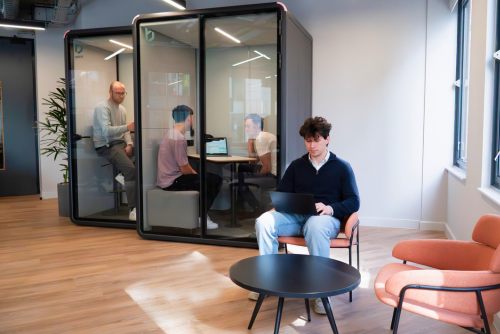
This is where Bureau shifts the focus: instead of asking individuals to work around these conditions, these conditions are designed to support the work.
- Focus areas reduce interruption
- Collaboration spaces allow conversation
- Buffer zones absorb noise and movement
That silences a negotiation most people don’t even realize they’re having. There’s no longer a need to signal “I’m trying to focus” or guard your attention from the room: you can let the space carry that weight for you.
Creating Conditions Where Work Can Continue
Layer in simple systems:
- Quiet periods
- Clear norms around interruption
- Visible signals for focus
Then support it with:
- Acoustic control
- Air quality monitoring
- Adaptive environments throughout the day
The result is not just starting work. It is finishing it.
The Real Takeaway
Morning routines create a brief window when the conditions coincide, showing what work feels like when nothing is pulling it apart.
Designing for those conditions means that experience isn’t limited to the first hour. The work continues. and reaches a point where it can be finished. Arrive early if you want the quiet.
But remember: quiet doesn’t make the work better. It removes everything that usually gets in the way.
Design Workspaces That Actually Support Focus
Most offices weren’t built for how work actually happens today. Bureau creates environments where focus, collaboration, and performance can coexist without compromise.
Share article with your community!


Productivity