Most Viewed

How Sound Affects Productivity at Work (And What to Do About It)

By Alex Kretowicz
Head of Growth
If you struggle to concentrate in a noisy office, there’s a neurological reason for it. Sound has a measurable impact on how well our brains perform, and the wrong acoustic environment can quietly drain your productivity without you even noticing. The good news: the right setup can do the opposite.
Here’s what the research says about sound and focus at work, and how to design a workspace that actually supports the way your brain works.
Why Sound Affects Your Brain at Work
Our brains process auditory signals continuously, even when we’re not actively listening. This background processing consumes cognitive resources whether we want it to or not.
Research shows that excessive noise raises cortisol levels, reduces working memory capacity, and makes cognitively demanding tasks significantly harder. One widely cited study found that employees in noisy open offices are up to 66% less productive than those working in quieter environments.
But silence isn’t always the answer either. The relationship between sound and performance is more nuanced: it’s about finding the right acoustic environment for the type of work you’re doing.
The 4 Sound Environments and How They Affect Productivity
#1 Open office noise
Open offices were designed to encourage collaboration. The unintended side effect is constant acoustic disruption. Overlapping conversations, ringing phones, and the ambient chatter of a busy floor make sustained focus difficult and increase cognitive fatigue over a full workday.
For employees who regularly need deep focus, unmanaged open office noise is one of the biggest productivity barriers in the modern workplace.
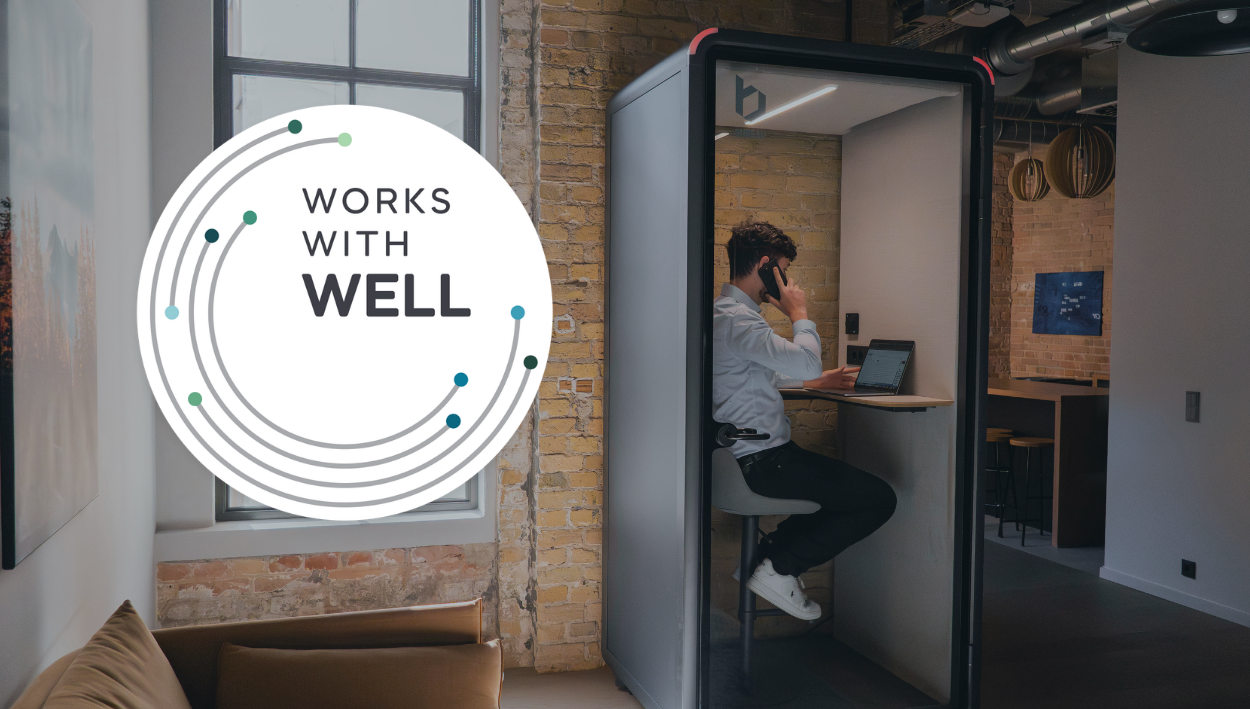
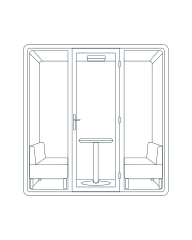
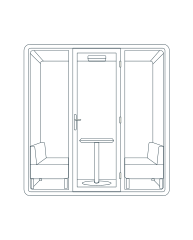
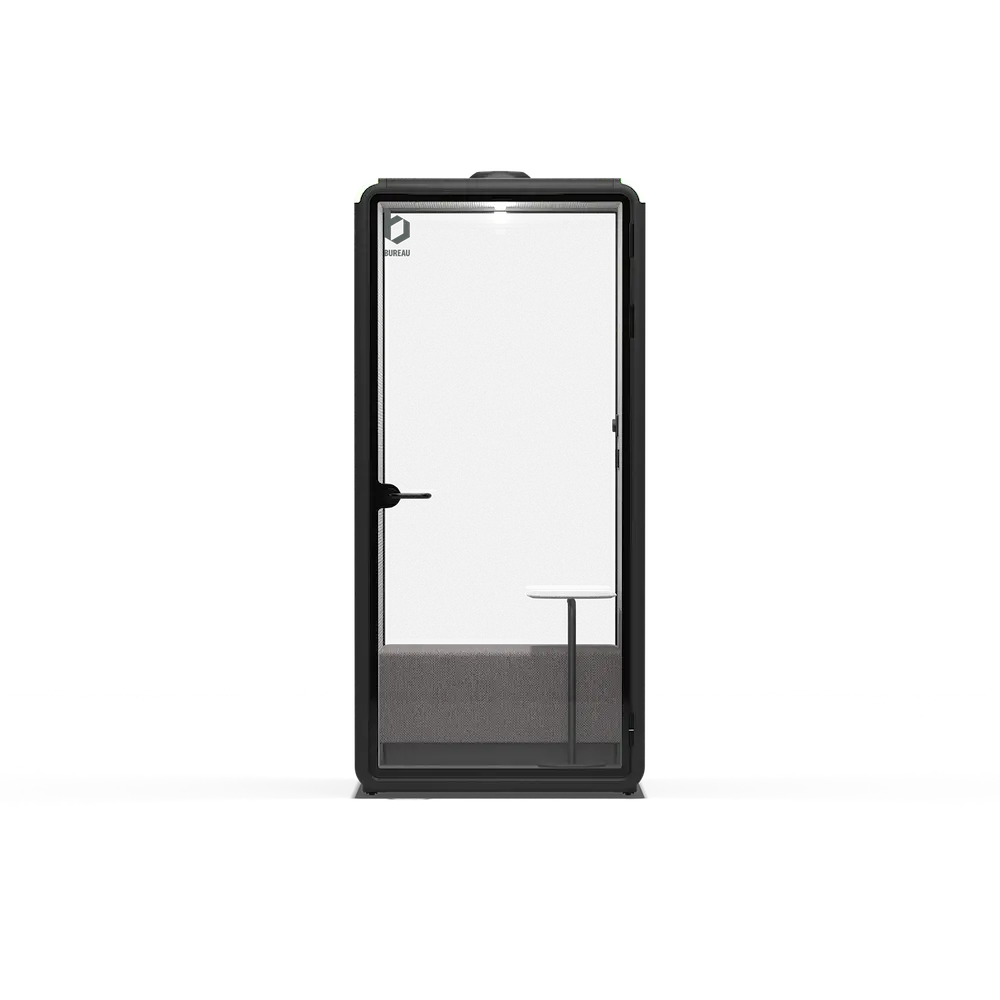
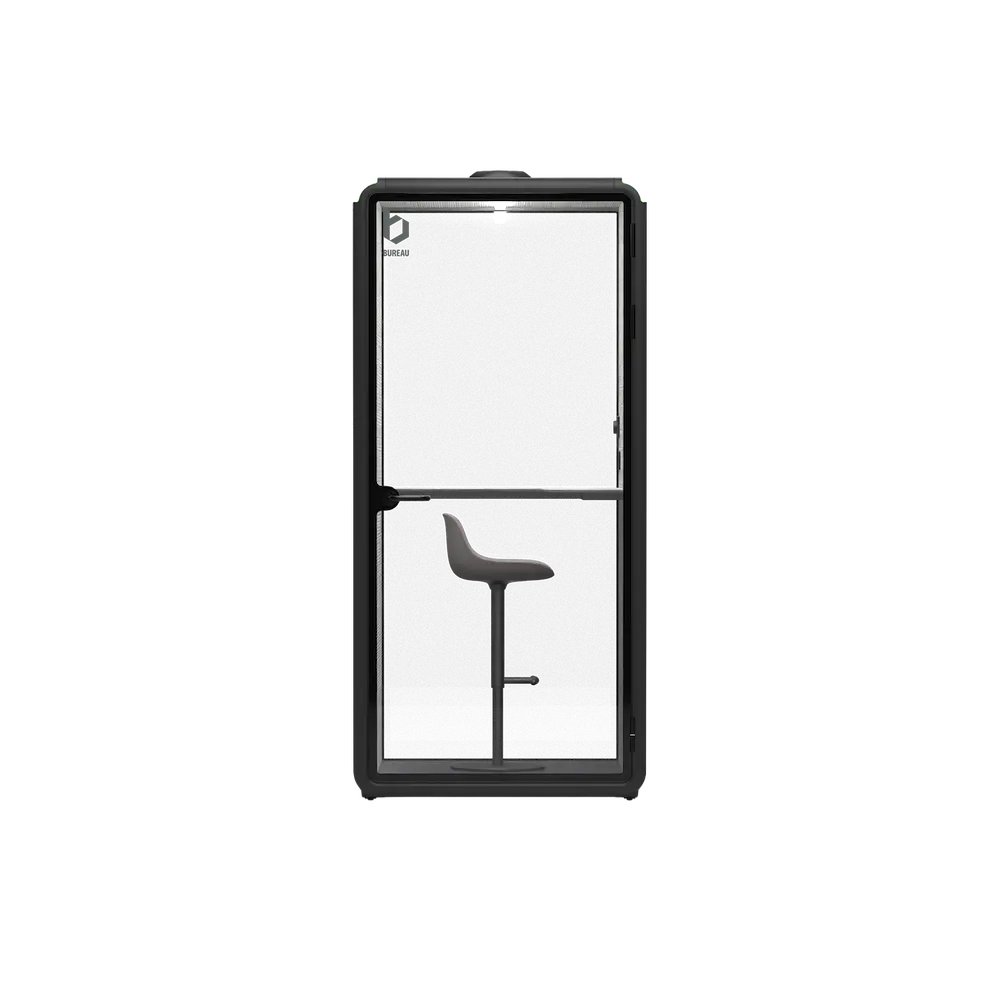
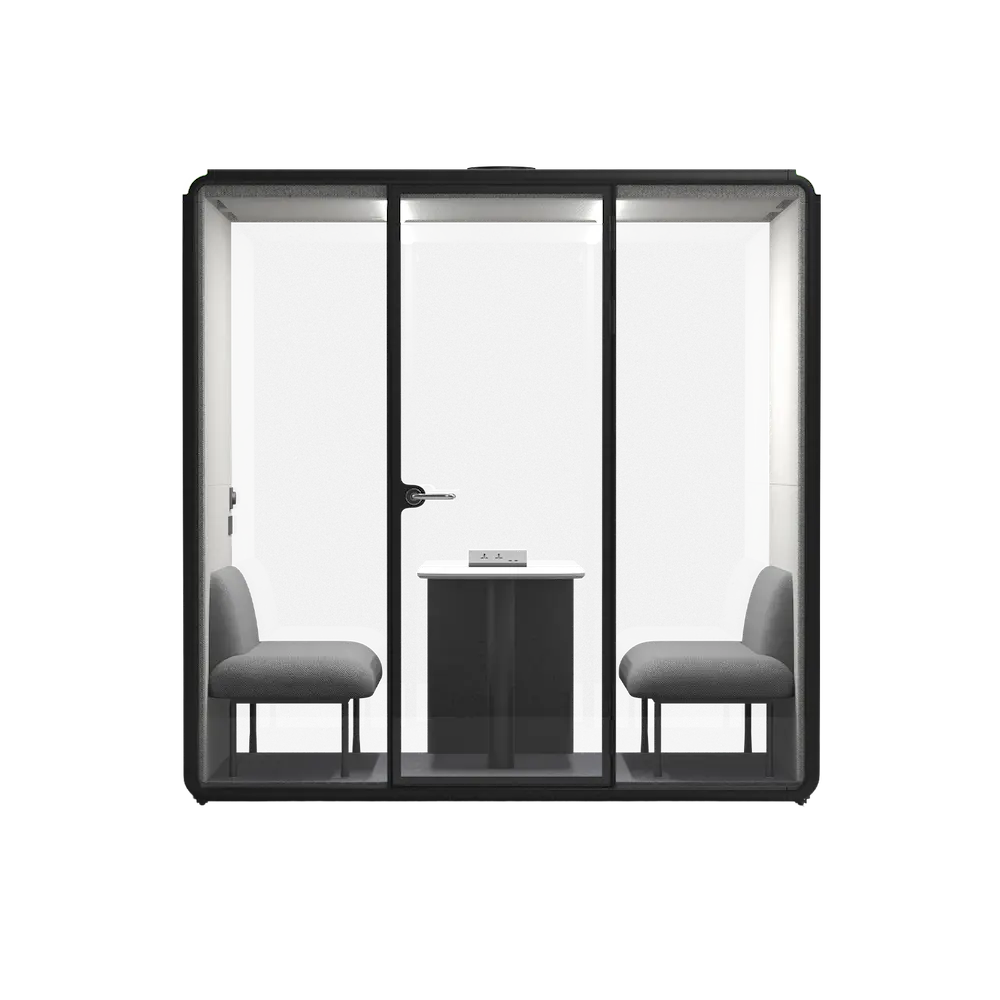
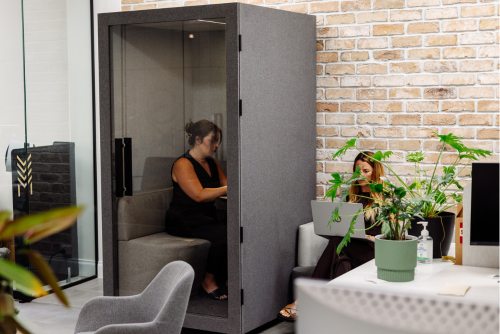
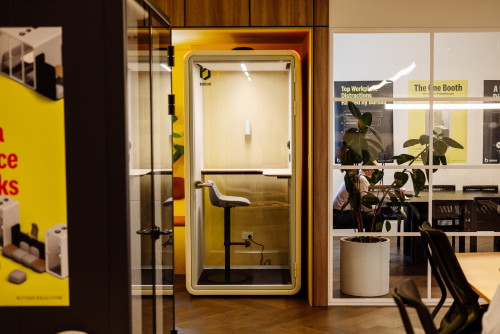
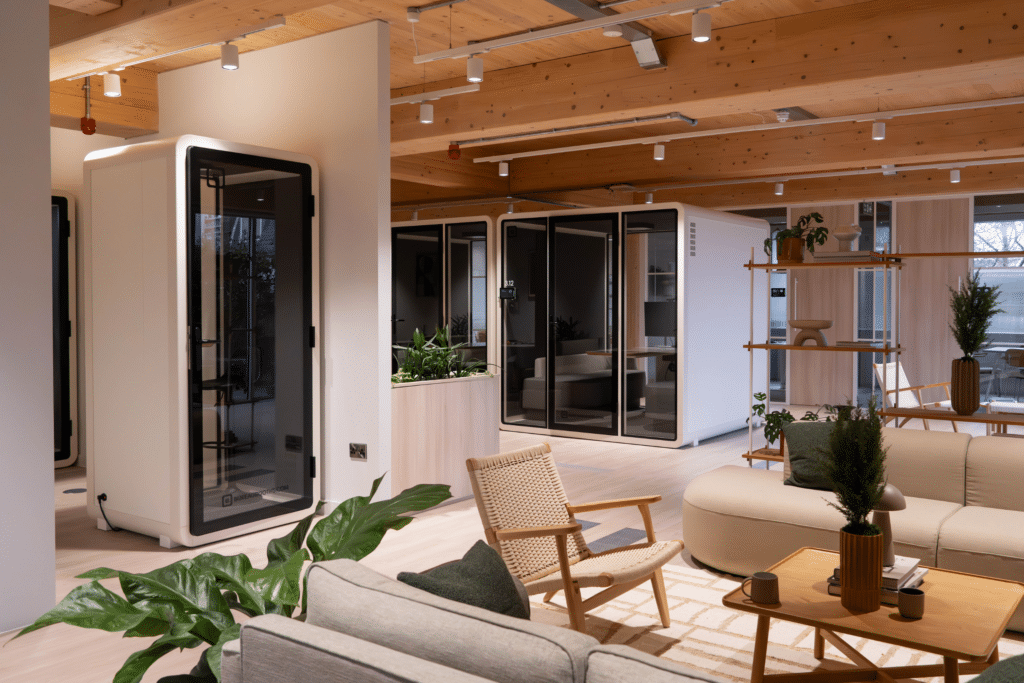
Solution: Dedicated quiet zones or soundproof booths give employees a place to retreat for focused work without requiring a full office redesign. Bureau’s office phone booths reduce ambient noise by 30+ decibels, creating library-level quiet inside even the busiest workspace.
#2 White noise & nature sounds
White noise works by masking irregular, attention-grabbing sounds with a consistent neutral tone. Research indicates it can improve sustained attention and reduce the cognitive impact of unpredictable office noise.
Nature sounds, such as rainfall or soft wind, have a similar effect and tend to feel less clinical for extended sessions. Apps like Noisli and Brain.fm offer a range of options worth experimenting with, particularly for employees who find complete silence uncomfortable.
For more ways to create a productive work environment, check out our blog on ergonomic office design.
#3 Music for focus
Music’s effect on productivity depends largely on what you’re listening to and what you’re working on.
Instrumental music (classical, lo-fi, ambient) supports deep work well because it provides auditory stimulation without the linguistic distraction of lyrics.
Upbeat music with a consistent rhythm can increase motivation and output for repetitive or physical tasks.
Lyric-heavy music tends to interfere with reading and writing tasks, as the verbal processing competes directly with written language comprehension.
The key is matching your playlist to your task type, not just your mood.
Want to know more about how your work playlist shapes your productivity? Read our blog on music personalities in the office.
#4 Silence
For complex problem-solving, information retention, and deep creative work, silence is often the highest-performance environment available. Research suggests it supports the consolidation of new information and reduces the cognitive load associated with filtering out unwanted input.
Not everyone has access to a quiet space at work. This is where acoustic solutions like noise-cancelling headphones or soundproof booths become genuinely functional tools rather than luxuries.
Which Sound Environment Is Right for Your Work?
The honest answer is that it depends on the task and the person. There’s no universal optimal soundscape. What matters is having options.
A practical framework:
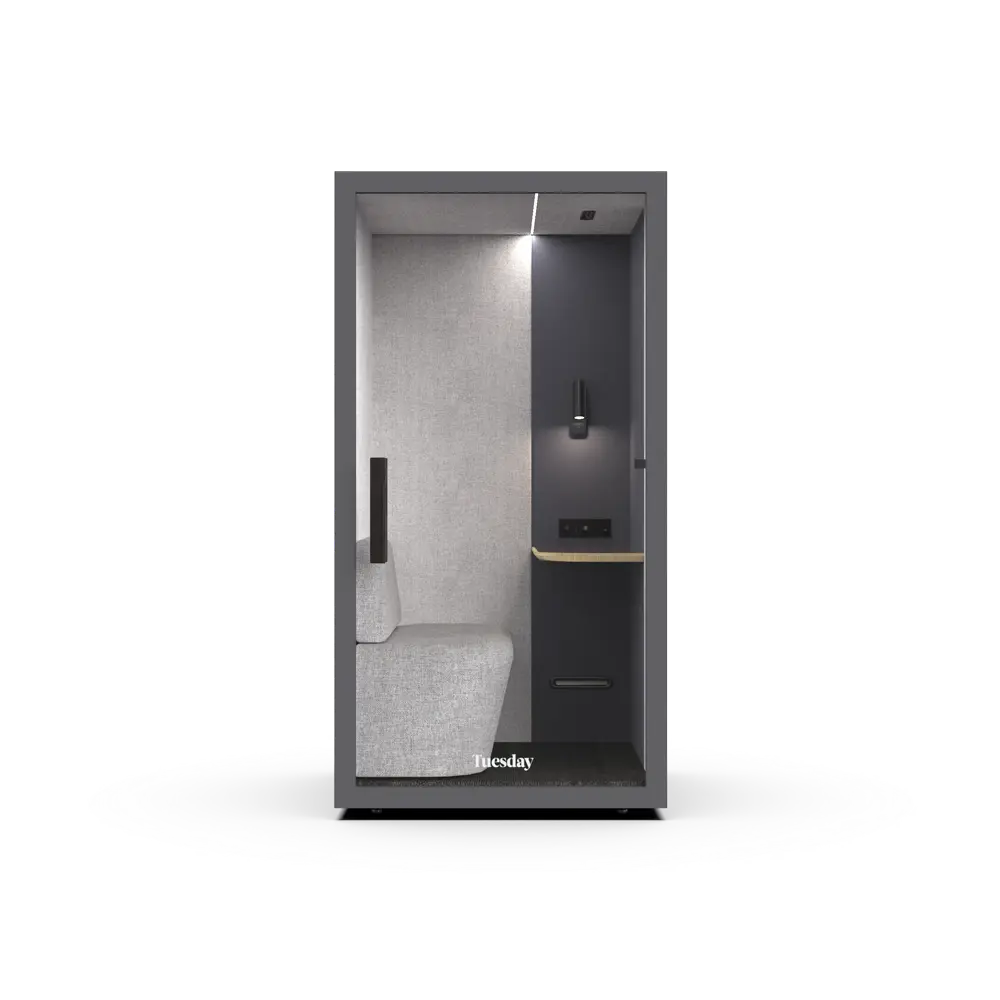
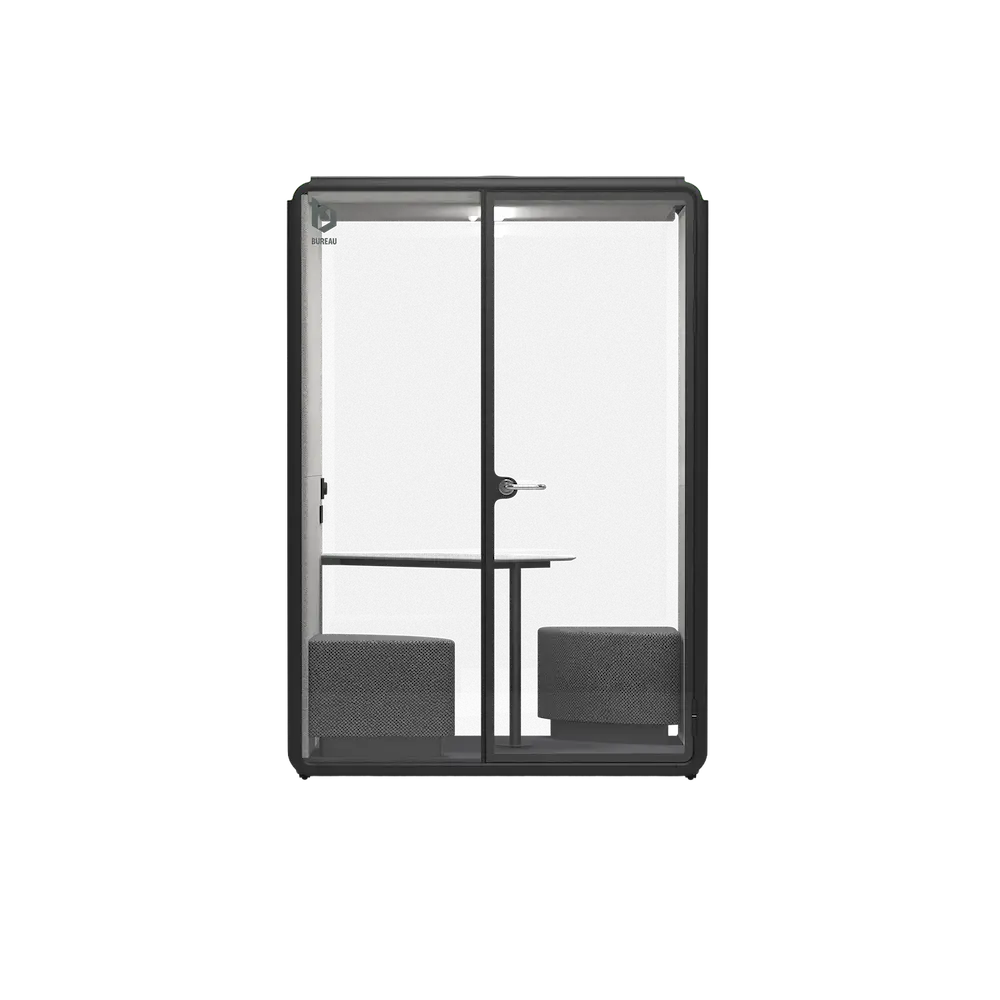
For deep focus work (writing, analysis, complex problem-solving): Aim for silence or low-level white noise. A private booth like the Bureau One gives employees a dedicated space to disconnect from office noise entirely.
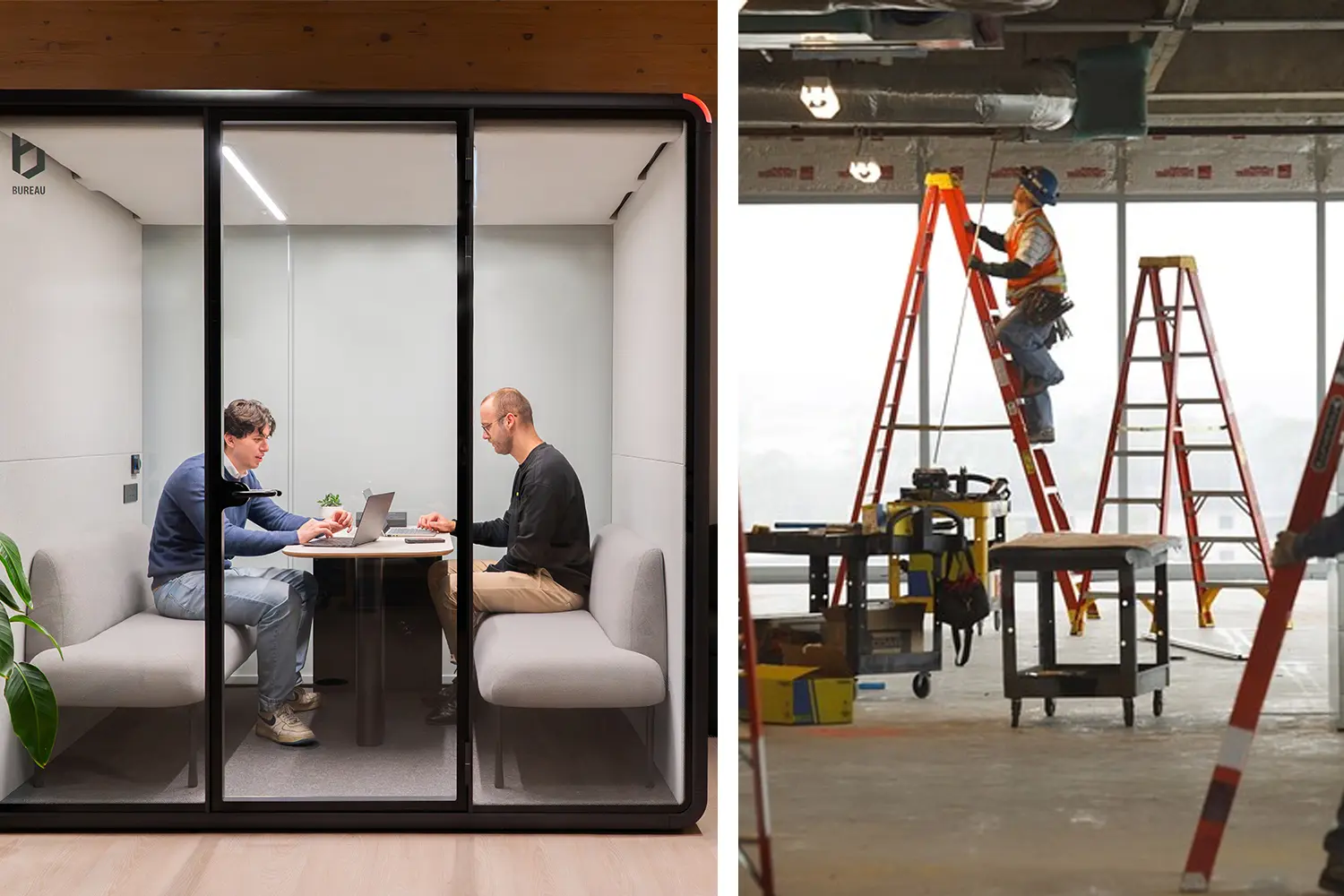
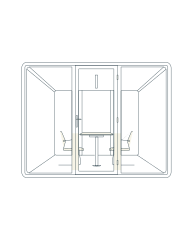
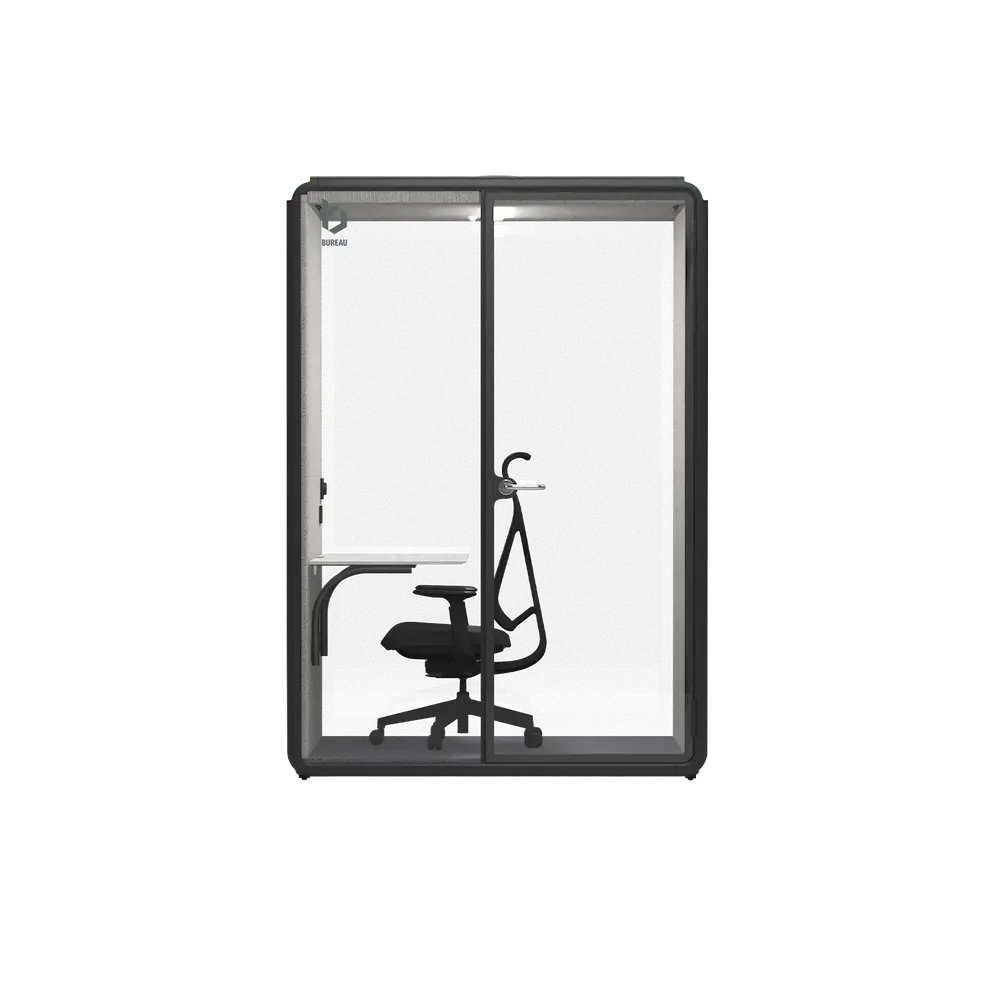
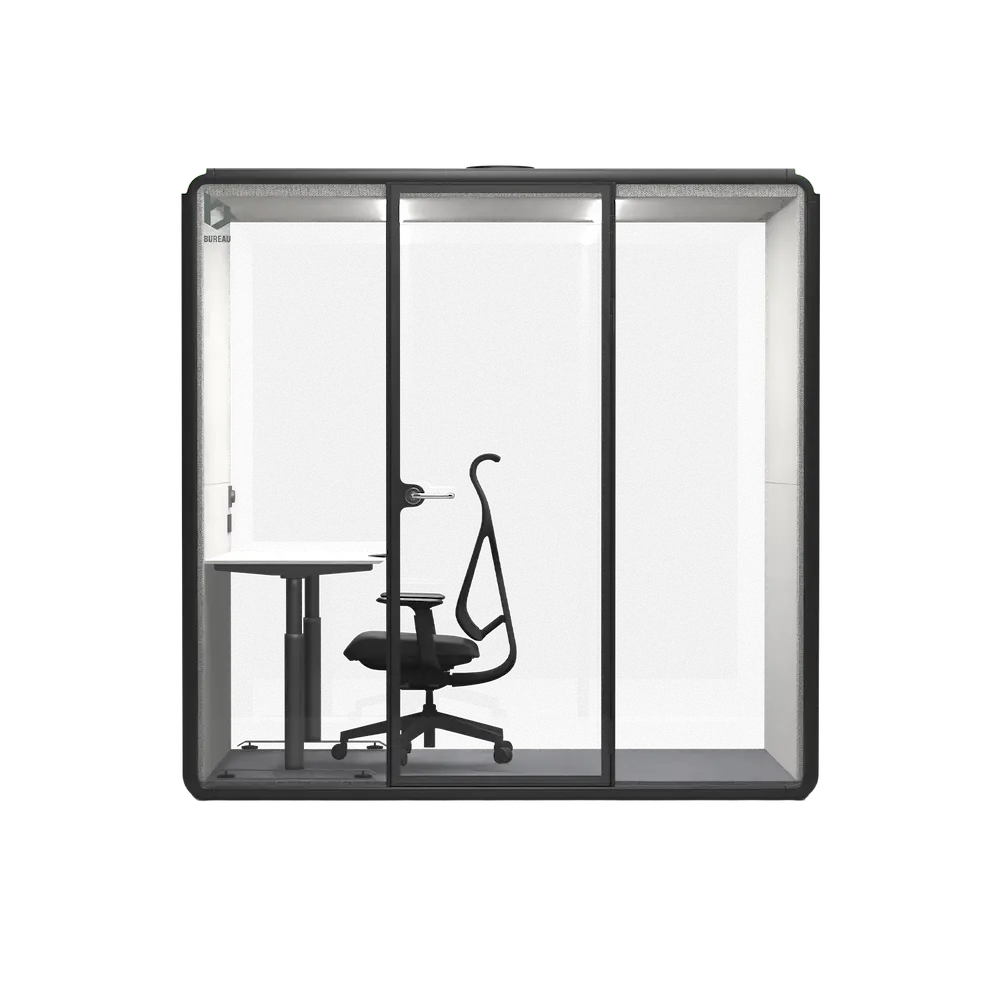
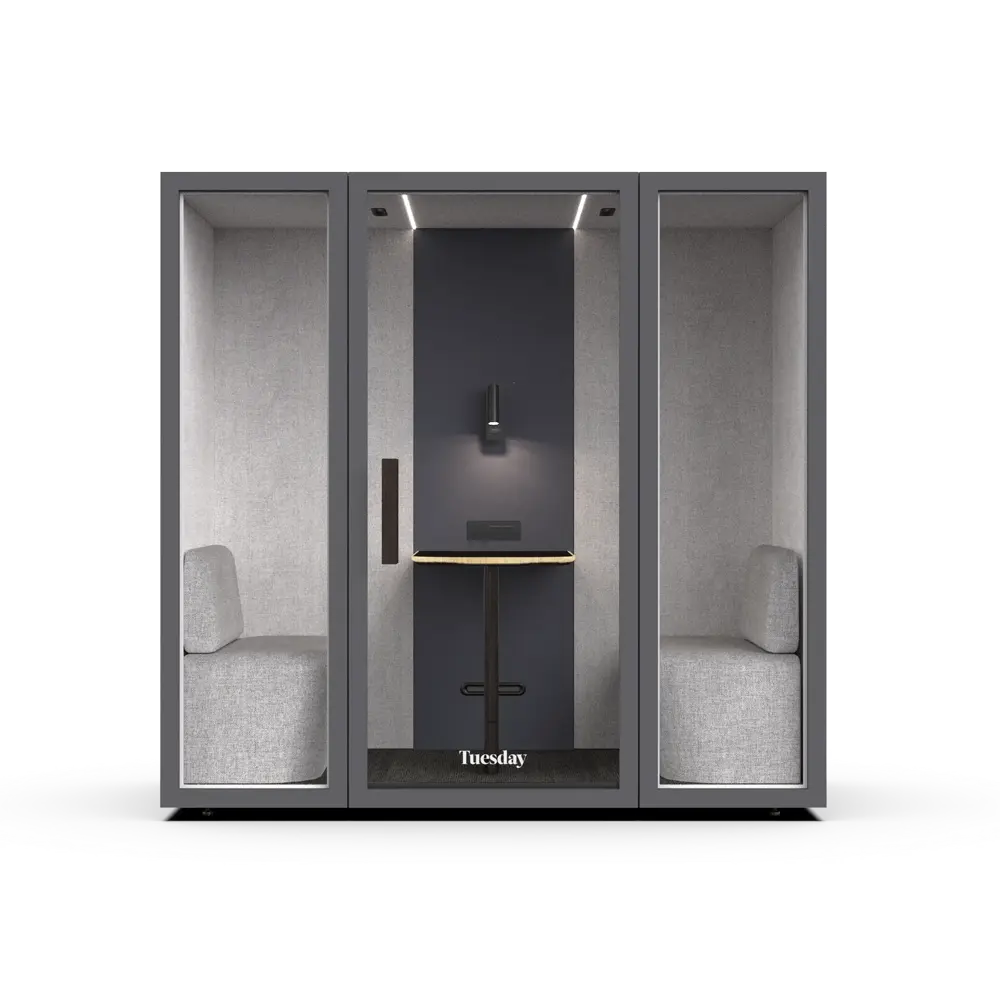
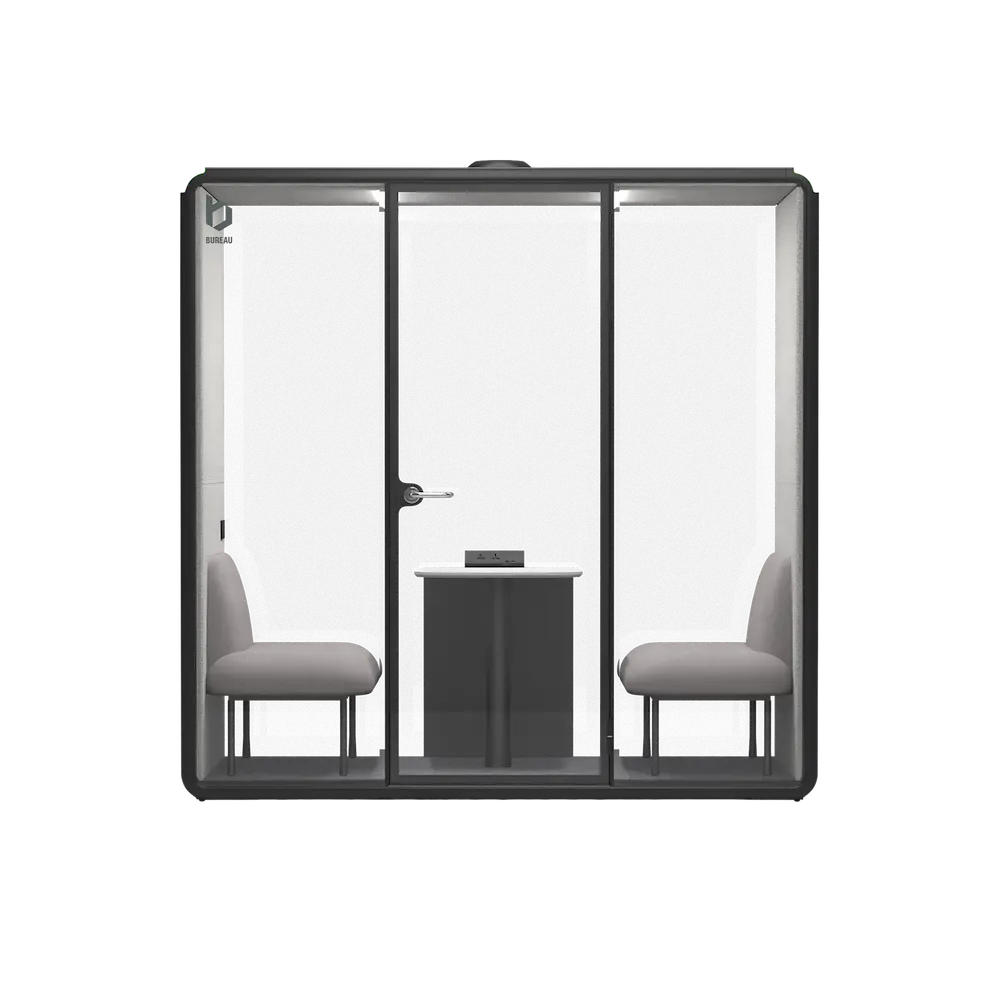
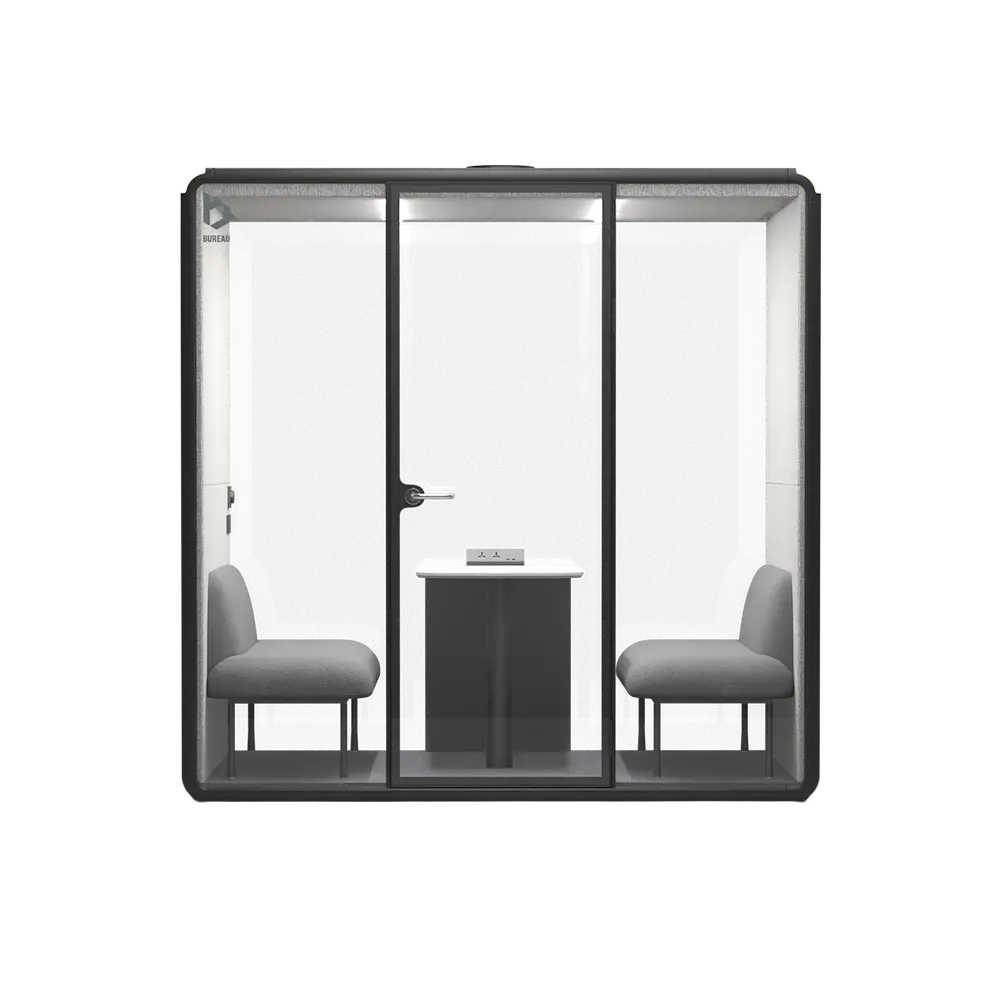
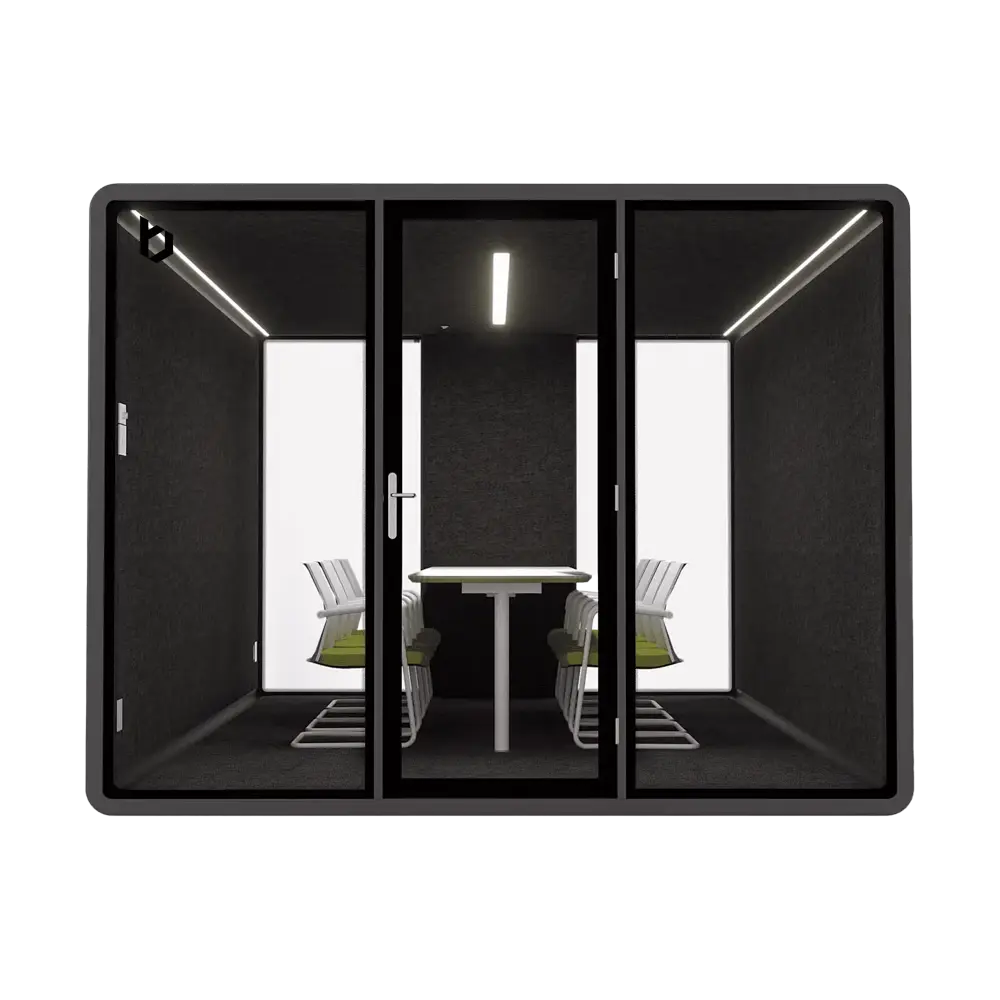
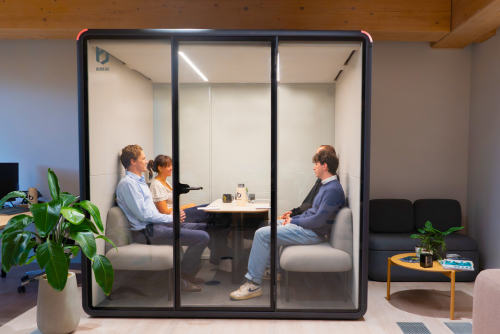
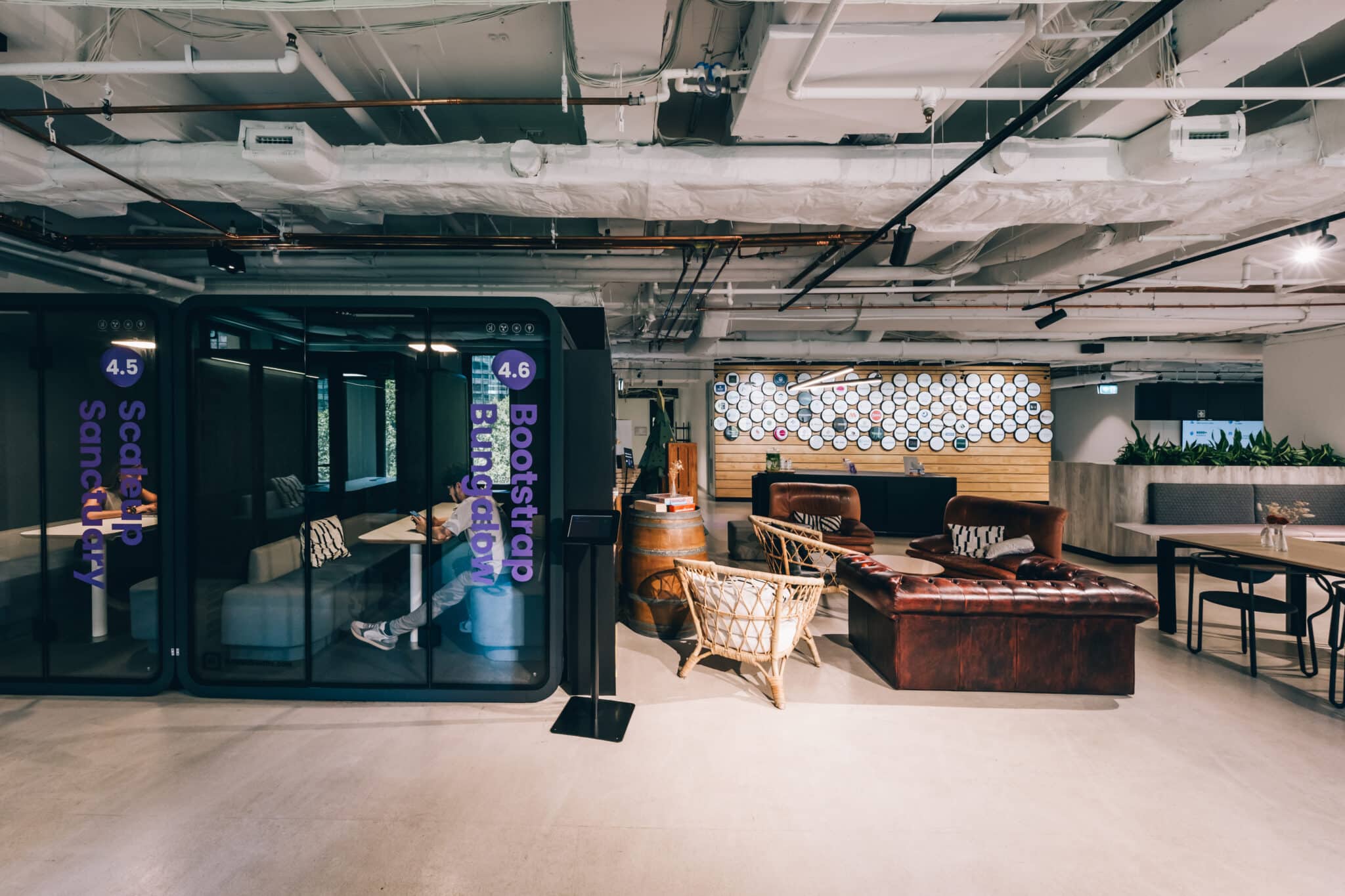
For collaborative sessions (brainstorming, workshops, team reviews): A semi-private acoustic space works better than a fully open floor. Bureau’s QUAD and TEAM booths create a sound-insulated environment where teams can think out loud without disrupting the rest of the office.
For calls and video meetings (client conversations, interviews, 1:1s): Background noise is unprofessional and distracting for everyone on the call. An enclosed booth like the Bureau One Plus eliminates interference entirely.
For routine administrative tasks (emails, scheduling, data entry): Ambient background noise or moderate music tends to work fine and can even improve mood and pace.
How to Build a Sound-Smart Workplace
Supporting focus across different work styles doesn’t require a full office renovation. It requires intentionality about acoustic variety.
Practical starting points include:
- Designating quiet zones where focused work is the norm and conversation is kept minimal
- Installing soundproof booths for calls, focused work, and small team collaboration
- Normalizing the use of noise-cancelling headphones as a “do not disturb” signal
- Giving employees access to sound apps for use at their desks
- Making it easy for people to move between noise levels throughout the day without friction
The offices that perform best acoustically are the ones where employees don’t have to fight their environment to get work done.
Frequently Asked Questions
Does white noise actually help you focus?
Yes, for many people it does. White noise masks unpredictable sounds that trigger attention shifts, creating a more consistent auditory backdrop. It’s particularly effective in open office environments where conversation noise is the main distraction.
What is the best work environment for concentration?
It depends on the task. Deep cognitive work generally benefits from low noise or silence. Repetitive tasks tolerate more ambient sound. The most productive workplaces offer a range of acoustic environments rather than a single setting.
How much noise reduction do soundproof office booths provide?
Bureau office booths reduce ambient noise by 30+ decibels, which is roughly the difference between a loud open office and a quiet library. This makes them effective for both focused solo work and private calls.
Can music improve productivity at work?
Yes, under certain conditions. Instrumental music supports focus during creative and analytical work. Upbeat music can help with repetitive tasks. Lyric-heavy music tends to reduce performance on reading and writing tasks.
Looking for more ways to enhance workplace well-being? Check out our blog on mindful breaks at your desk for simple stress-relief techniques you can incorporate into your daily routine.
Share article with your community!


Most Viewed