 CanadaCAD
 United StatesUSD
 United KingdomGBP
 AustraliaAUD
 EuropeEUR
 Global—
Deskside


The office is an excellent place to be present. It is a surprisingly bad place to think. From car lunches to coffee badging, here is where people go to find a door that closes, and the very old habit they are repeating.
The Parked Car
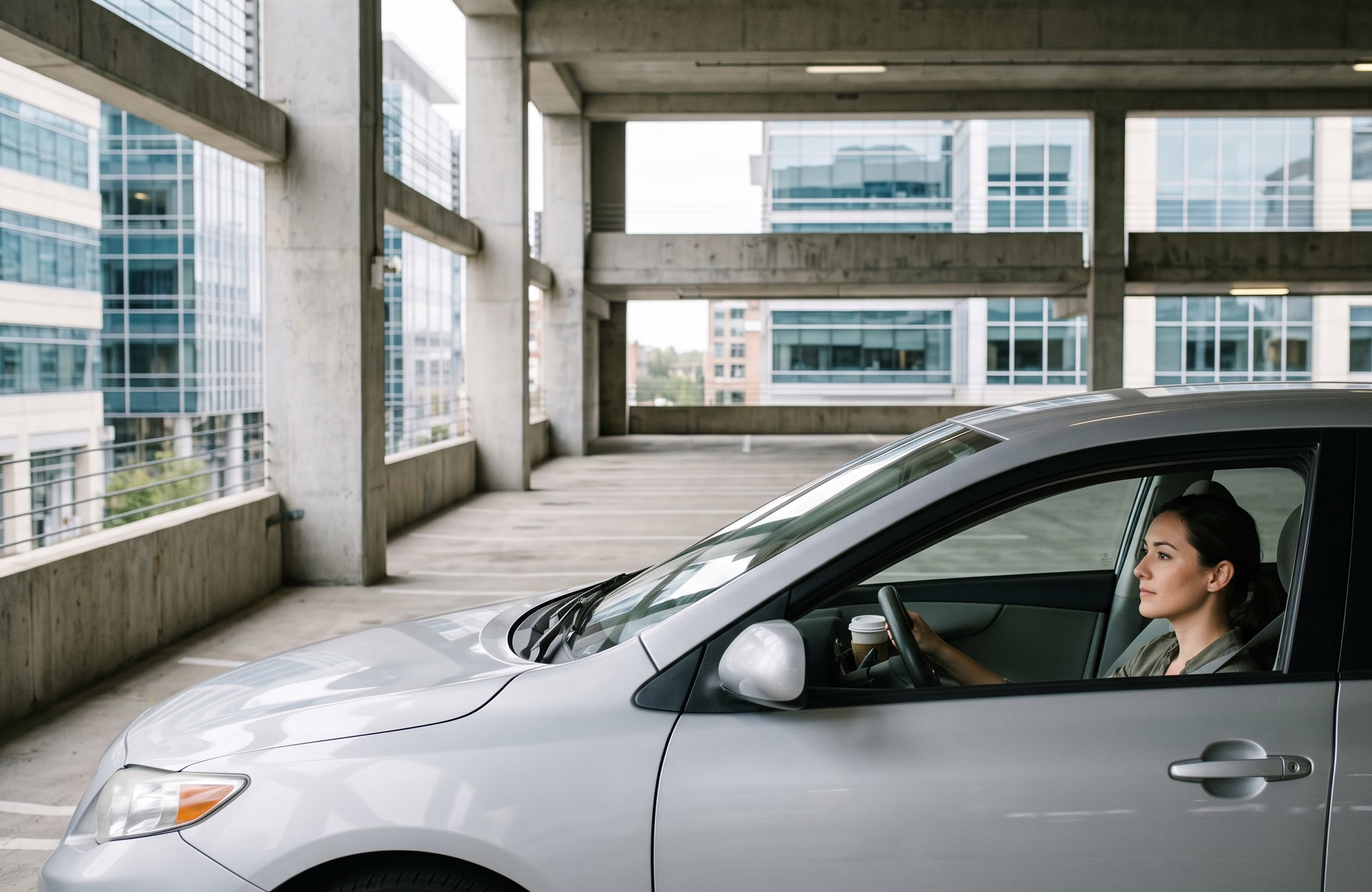
At 12:40 on a Tuesday, in a parking structure outside an office park in Dallas, a woman turns sideways in the driver’s seat, uses the steering wheel as a table for leftover pasta, and lets the radio run just low enough to disappear. Her phone sits face down, angled so a passerby would assume she’s replying to an email. She isn’t hiding. She’s checked into the one room in a nine-hour day that answers to no one but her. TikTok has a name for this: “car lunch,” and thousands of videos of people doing, with real ceremony, absolutely nothing in a parked car.
The office is an excellent place to be present. It is a surprisingly bad place to think.
A parked car works because of what it refuses to offer. It’s hers and quiet in the one way an open floor can never be: no ambient calls, no keyboard percussion, no colleague narrating Slack out loud. And nobody has ever sent a calendar invite for someone else’s car.
The New Cloister
Monasteries built cloisters so people could think in circles without being watched. Factories cut smoking yards into their floor plans, ostensibly for tobacco. Hospitals still budget for courtyards, where staff move between one difficult conversation and the next. The parked car just joined a very old club.
The Interruption Tax
Gloria Mark has spent two decades at UC Irvine clocking how long people look at a screen before switching away. In 2004, it was 2.5 minutes. Now it’s 47 seconds. Organizational psychologist Sophie Leroy calls what follows “attention residue”: unfinished thinking from one task that clings to the next. Four consecutive meetings leave a person more wrecked than four hours of real concentration. None of the thinking from meeting one has finished before meeting two begins.
So people relocate. A call taken in the stairwell, sunglasses still on, because a stairwell has no assigned seating and therefore no audience. A loop around the block before a hard email. Severance built an entire show on a workplace that surgically separates the thinking self from the performing one, and it plays as recognizable, not dystopian, because most people already run an unofficial version of that split, on foot, several times a day.
Walking as Cognition
Stanford researchers found that walking, indoors or out, boosted creative output by 60% compared to sitting still. Aristotle taught while walking. So, more recently, did Steve Jobs, who ran some of Apple’s biggest conversations through the hills above Palo Alto. Nobody needed a study to believe this. It’s just nice to have one.
The Coffee Shop Exception
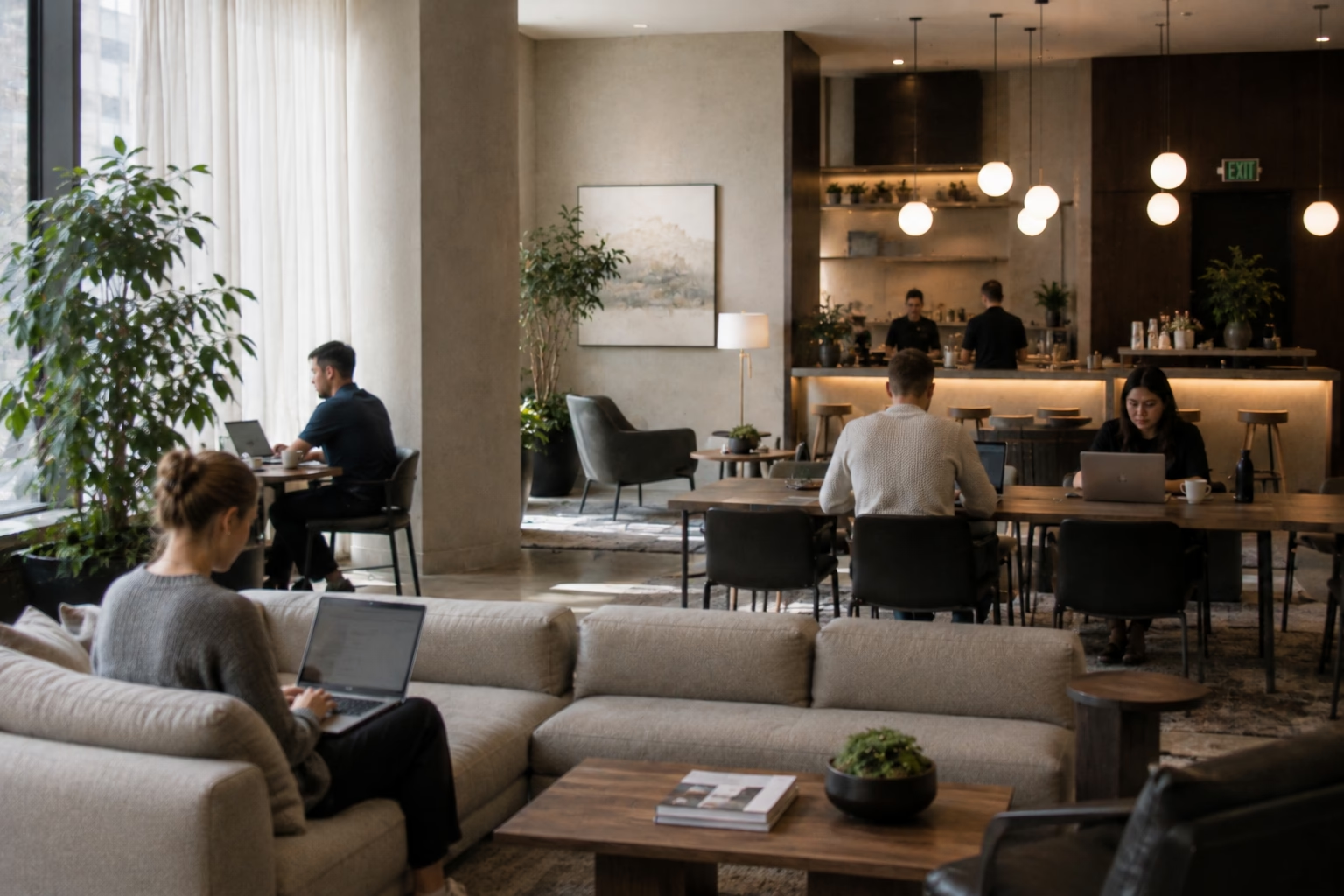
Nobody goes to a coffee shop for the coffee. They go because the barista wants nothing from them beyond a name for the cup: a rare kind of anonymous company. A 2012 University of Illinois study found the specific roar of a café, around seventy decibels, produces sharper creative thinking than either silence or real noise. Ray Oldenburg called places like this the “third place,” back when he meant community. Nobody asked him, but it has since become a theory of concentration instead.
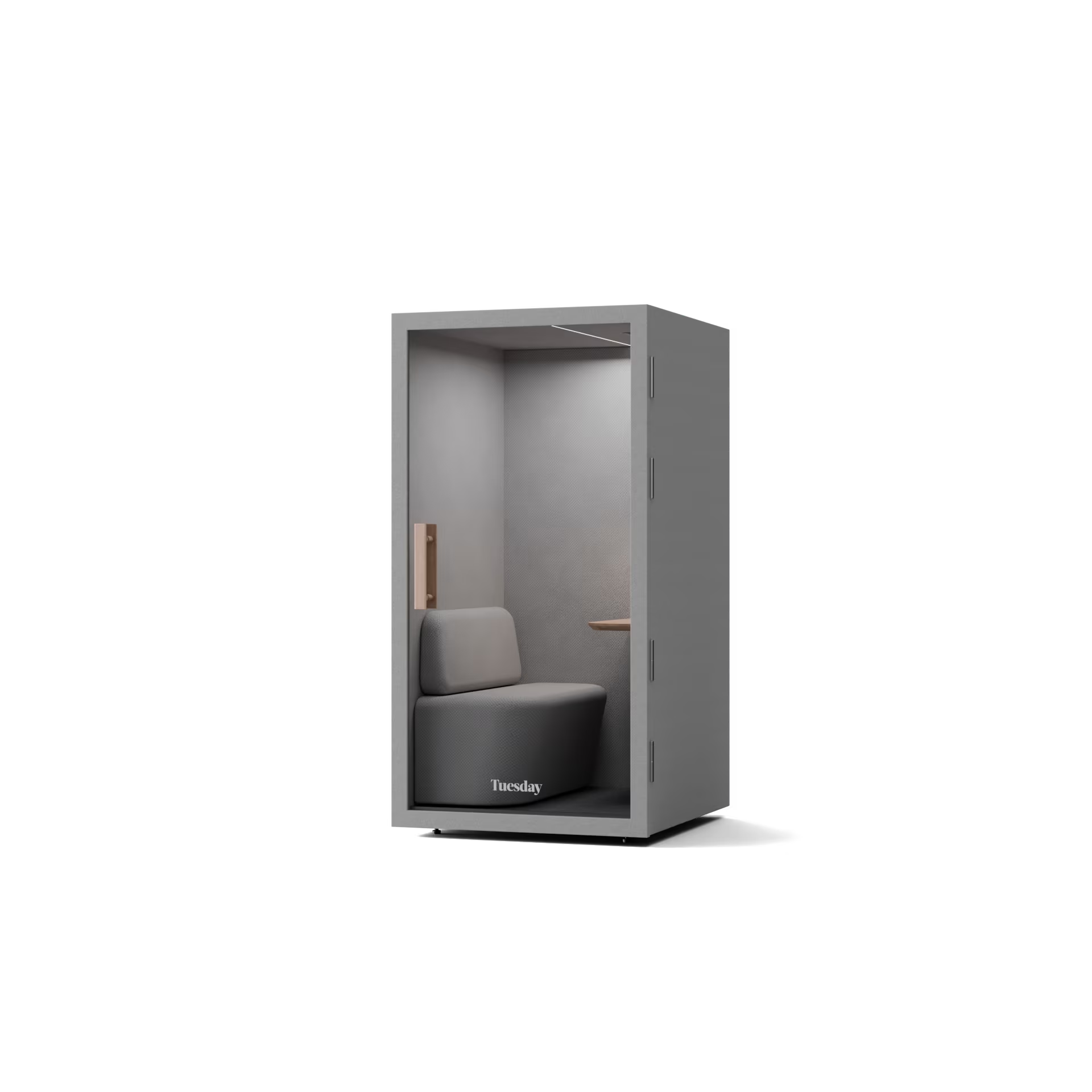
Catching Up
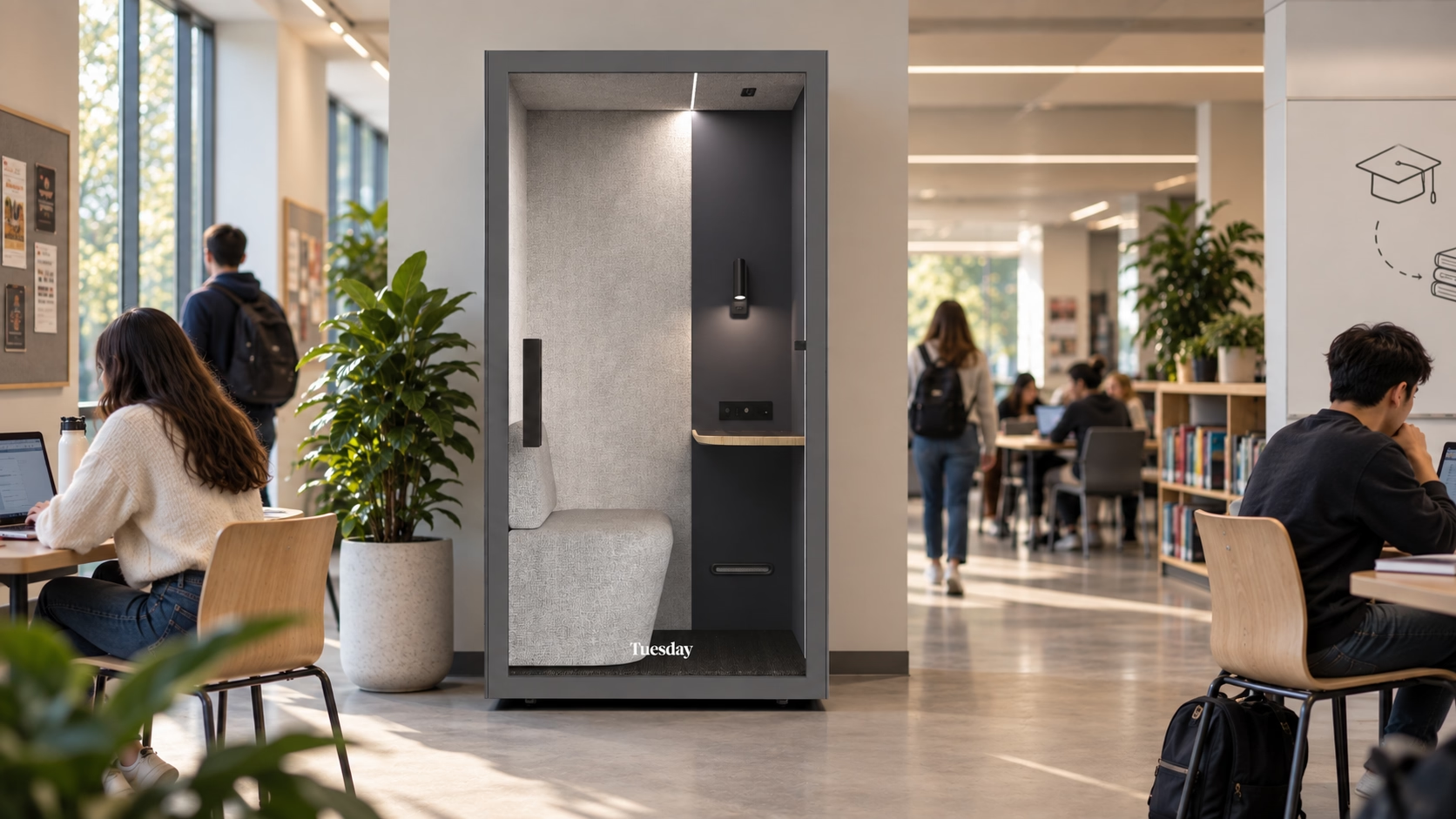
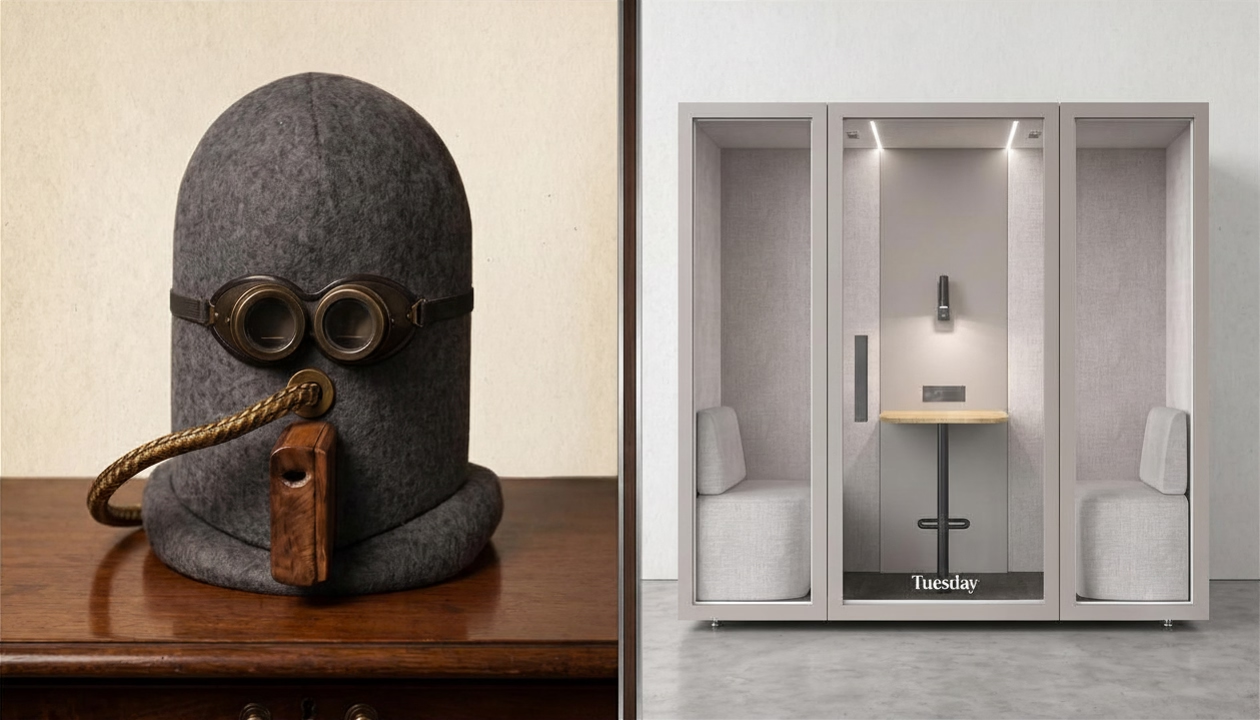
A decade ago, acoustic phone booths in offices were a novelty. That market is set to nearly triple by 2033. Fifty-eight percent of hybrid workers now practice “coffee badging”: swiping in long enough to be seen, then leaving to think somewhere the badge reader can’t follow. But nobody’s filing a report on it.
Tomorrow, at 12:40, someone will sit in a parked car outside a building they’re still, technically, inside. They’re not skipping anything. For twenty minutes, the car is the only room with a door that actually closes. Monks had cloisters. Our generation has a parking structure.
Explore Bureau’s Range of Soundproof Pods or book a visit to one of our showrooms
Frequently asked questions
Why is it hard to concentrate in an open office?
Open offices offer constant interruption and no acoustic privacy. Research from Gloria Mark at UC Irvine found average screen focus fell from 2.5 minutes in 2004 to 47 seconds today, and Sophie Leroy’s concept of “attention residue” describes how unfinished thinking from one task clings to the next, which back-to-back meetings make worse.
Does walking actually improve thinking?
A Stanford study found that walking, indoors or outside, increased creative output by 60% compared with sitting still.
Why do people focus better in coffee shops than in silence?
A 2012 University of Illinois study found that moderate ambient noise, around seventy decibels, the typical level of a café, produced sharper creative thinking than either silence or loud noise.
What is a “car lunch”?
A car lunch is the practice of spending a lunch break alone in a parked car, eating or simply sitting in quiet, to escape the noise and social demands of an open office. The term spread on TikTok, where people film themselves doing deliberately nothing in a parked car.
What is “coffee badging”?
Coffee badging is when a hybrid worker swipes into the office long enough to be seen, then leaves to do focused work elsewhere. One survey found 58% of hybrid workers do it.
Share article with your community!


Deskside