 CanadaCAD
 United StatesUSD
 United KingdomGBP
 AustraliaAUD
 EuropeEUR
 Global—
Tips


In the modern workplace, open office layouts are popular for fostering collaboration and communication. However, when we think of the possible downside of working at an office, ergonomic concerns and the impact associated with prolonged sitting usually come to mind. We tend to overlook the potential cognitive strain that office environments can have on our overall health.
One significant contributor to this mental burden is noise, particularly in open-layout offices, which can prove challenging for noise-sensitive individuals. Disruptive office noise can pose a significant challenge to maintaining focus and can hinder concentrated work efforts. Additionally, excessive office noise contributes to fatigue, heightened stress levels, reduced motivation, and diminished job satisfaction. Only 31% of employees report being satisfied with noise levels in their workplace, according to the Leesman workplace benchmark of over 500,000 respondents worldwide, making it one of the most consistently cited complaints in office design.
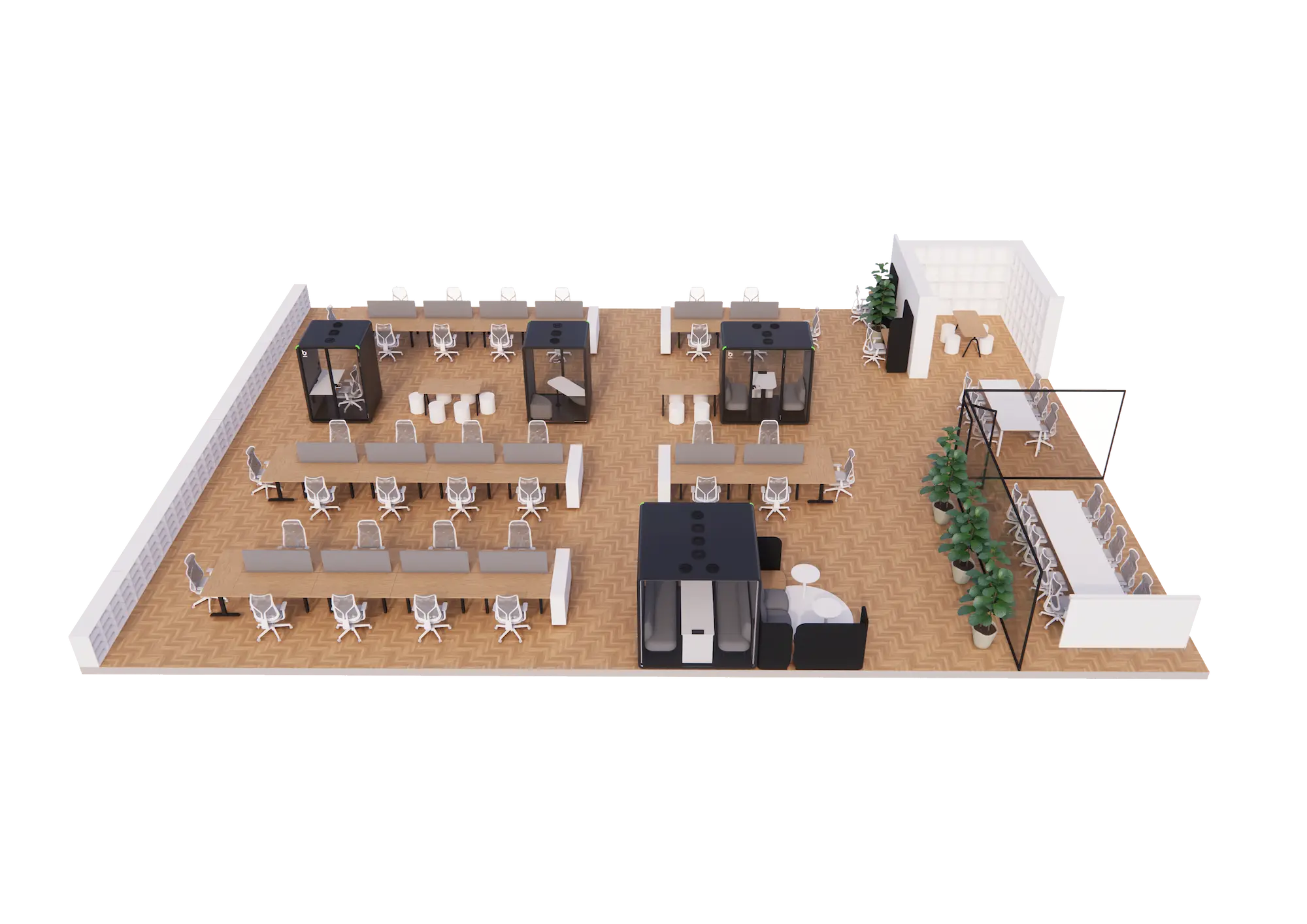
The three most effective ways to reduce noise in an open office are designated quiet zones, noise-absorbing furniture, and soft furnishings like carpeting and acoustic panels. Each targets a different source of noise, and most offices see the best results by combining all three rather than picking one.
Key Takeaways
- Open offices can reduce productivity by up to 66% according to a 2015 World Green Building Council report, and noise is consistently cited as the top workplace complaint
- Only 31% of employees are satisfied with noise levels in their office, per the Leesman benchmark of 500,000+ respondents
- Carpet alone can reduce impact sound transmission by 20 to 30 decibels, making flooring one of the highest-leverage, lowest-effort fixes available
- Soundproof booths solve the quiet zone problem without a full office redesign, since they install on an existing floor plan in hours rather than weeks
#1 Create Designated Quiet Zones for Focused Work
Incorporating a designated quiet zone within your office layout can provide employees with a sanctuary for focused work and uninterrupted concentration. This area should be strategically located away from noisy common areas and equipped with sound-absorbing materials to minimize disruptions.
Benefits of a Designated Quiet Zone:
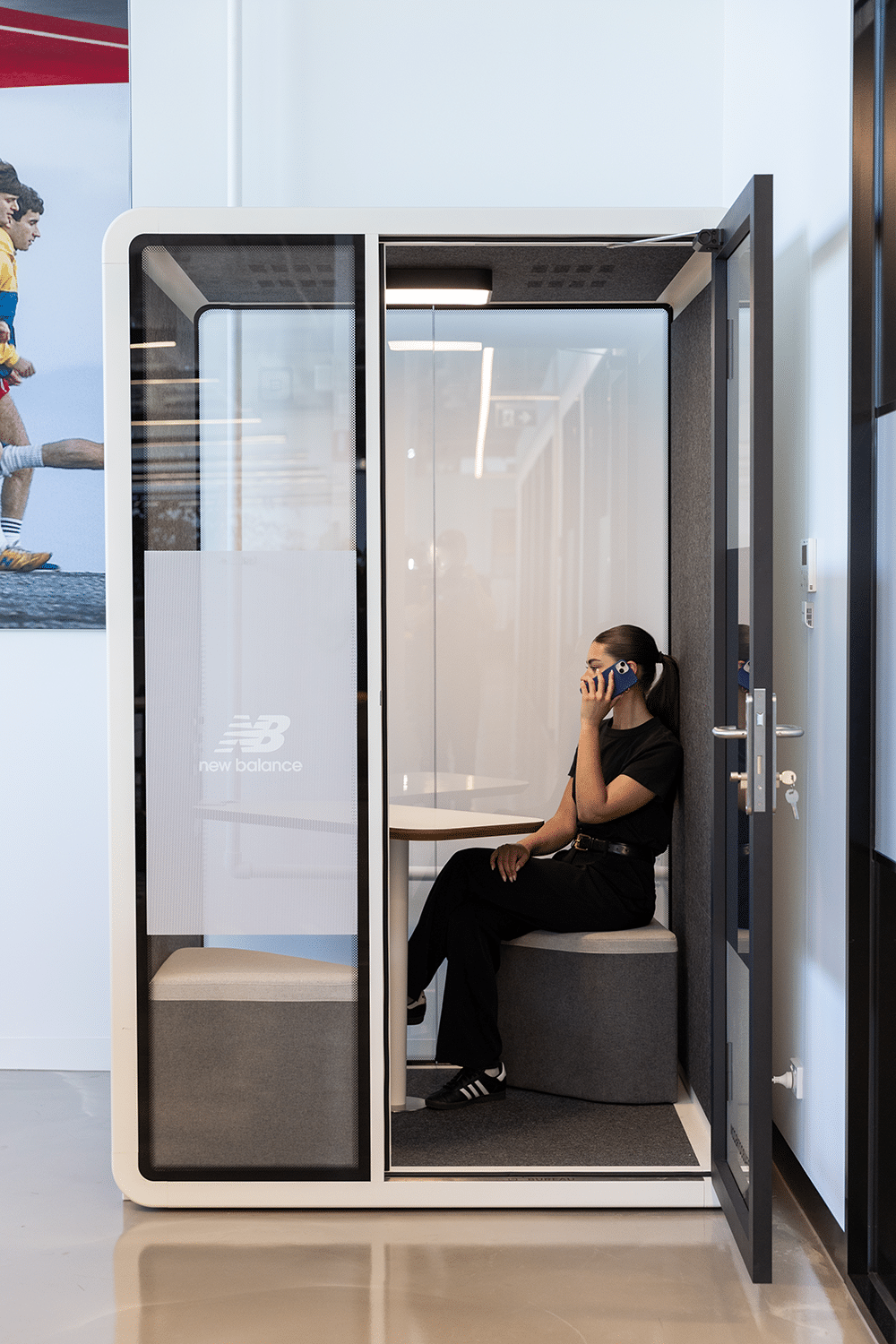
Enhanced Concentration: Employees can escape distractions and immerse themselves in their tasks, leading to increased productivity and efficiency. Did you know our Bureau One+ was built specifically for you to open your laptop, get in the zone, and stay in it all day.
Reduced Stress Levels: Providing a quiet retreat allows employees to decompress and alleviate stress, promoting overall well-being and mental health.
Improved Employee Satisfaction: Offering a space conducive to focused work demonstrates an employer’s commitment to employee comfort and satisfaction, fostering a positive work environment.
Facilitated Collaboration: While the quiet zone prioritizes individual concentration, it can also serve as a space for group-focused meetings or discussions requiring minimal disruption. Our Bureau Quad+ is great for holding distraction-free team meetings for up to four people.
How a Booth-Based Quiet Zone Works in Practice
A single booth does the job a whole quiet zone policy is trying to achieve, without needing employees to police each other’s noise levels. Integrating a Bureau booth within your designated quiet zone offers a private oasis where employees can escape ambient noise and distractions. Soundproof booths create an optimal environment for concentrated work, ensuring maximum productivity and peace of mind. With features like motion-sensor lights and automatic fans, our booths enhance comfort and convenience within the designated quiet zone, promoting employee well-being and satisfaction.
#2 Choose Ergonomic, Sound-Absorbing Furniture
Consider investing in ergonomic furniture solutions that are created to minimize noise transmission and enhance comfort. Materials rated for sound absorption use a Noise Reduction Coefficient (NRC) score, where 1.0 absorbs nearly all incoming sound and 0 reflects nearly all of it. Choosing furniture with a higher NRC rating is a straightforward way to cut ambient noise without a full renovation. Opting for the following elements in your office setup can make a measurable difference and create a personalized workstation that is conducive to getting focused work done:
Sound-Absorbing Work Surfaces: Choose desks or workstations with materials that absorb sound, such as cork or fabric-covered panels, to minimize noise disruptions during work hours.
Ergonomic Chairs with Noise-Reducing Upholstery: Look for ergonomic chairs featuring noise-reducing upholstery, such as dense foam or fabric designed to dampen sound, providing employees with comfortable seating options that promote focus and concentration.
Adjustable Desk Dividers: Install adjustable desk dividers between workstations to create boundaries and minimize distractions from neighboring coworkers. These dividers can be raised or lowered according to individual preferences, allowing employees to make their workspace environment suit their needs.
Why Furniture Alone Has Limits
Furniture-level fixes reduce transmission between neighboring desks, but they don’t fully solve confidential calls or deep-focus work, since sound still travels across an open floor. Incorporating Bureau booths, such as the Quad+ or Team models, into your office layout offers employees versatile collaboration hubs designed to enhance productivity and foster innovation. These modular office rooms feature premium furnishings and customizable layouts, providing a serene environment conducive to creativity and teamwork. With soundproof construction and thoughtful design, Bureau booths help employees focus on their tasks without being disturbed by ambient noise, promoting a more efficient and enjoyable work experience.
#3 Add Carpeting and Soft Furnishings to Cut Reverberation
Carpet alone can reduce impact sound transmission by 20 to 30 decibels compared to hard flooring, making it one of the highest-impact, lowest-disruption changes an office can make. Covering hard surfaces with carpeting and incorporating soft furnishings such as curtains, upholstery, and acoustic panels can effectively absorb sound and reduce reverberation in the office environment. These materials work together to dampen noise levels, creating a more comfortable and acoustically balanced workspace.
Carpeting: Installing carpeting throughout the office helps to absorb sound and reduce the transmission of noise between floors. Choose dense and plush carpeting materials for maximum effectiveness in noise reduction.
Soft Furnishings: Using soft furnishings like curtains, upholstered furniture, and acoustic panels can further dampen sound and minimize echoes in the office space. These materials provide additional layers of noise absorption, creating a more pleasant and conducive work environment.
Pairing Soft Furnishings With Enclosed Spaces
Carpet and panels handle reverberation across the floor, but they don’t replace the enclosed privacy a booth provides for calls and focused work. The two approaches solve different problems and work best together. Including Bureau booths, such as the Quad+ or Team models, into your office layout offers employees spacious and flexible meeting spaces equipped for productive collaboration. These modular office rooms can be configured to accommodate various work setups and provide a quiet environment for team discussions and brainstorming sessions. Booths like the Tuesday or One+ also provide employees with a quiet space for focused work and private discussions. These booths are equipped with advanced acoustic features to ensure clear communication and minimize disruptions from external noise.
By implementing these effective strategies for reducing noise in your open office, you can create a more conducive work environment where employees can focus, collaborate, and thrive.
Shop our range of Bureau online or book an appointment to visit our showroom and test out the booths in an office environment.
FAQ
What’s the fastest way to reduce noise in an open office?
A soundproof booth is typically the fastest fix, since it can be installed in hours without construction or permits, unlike physical renovations or a full office redesign. Combining a booth with a quiet zone policy addresses both the physical and behavioral sides of the problem.
Does open office noise actually hurt productivity, or is it just annoying?
It’s a measurable productivity cost, not just an annoyance. A 2015 World Green Building Council report found open-plan offices can see productivity drops of up to 66% due to noise and distraction.
What office furniture actually helps reduce noise?
Sound-absorbing work surfaces (cork, fabric-covered panels), ergonomic chairs with noise-dampening upholstery, and adjustable desk dividers all help reduce noise transmission between workstations. Carpeting and acoustic panels reduce reverberation across the wider space.
Do soundproof booths work better than carpeting and acoustic panels?
They solve different problems. Carpeting and panels reduce ambient reverberation across the whole office. A soundproof booth gives an individual or small group a fully enclosed, private space, which is necessary for confidential calls or deep focus work in a way that panels alone can’t provide.
Can quiet zones and collaboration spaces coexist in the same office?
Yes. A designated quiet zone built around individual booths, like a One+ or Tuesday, can sit alongside larger meeting booths like a Quad+ or Team, giving employees both focused solo space and a private space for small group discussions without needing separate renovations for each.
Share article with your community!


Tips