
 CanadaCAD
 United StatesUSD
 United KingdomGBP
 AustraliaAUD
 EuropeEUR
 Global—
Seismic anchoring refers to the hardware and connection points fastened directly into the floor of a building to hold a freestanding structure, such as an office booth, in place during an earthquake. In practice, this means drilling into the floor slab, usually concrete, and installing anchor bolts that create a fixed connection between the building and the booth.
Why Seismic Anchoring Matters for Office Booths
In high seismic risk regions like British Columbia and California, building codes often require freestanding structures above a certain size to be secured to the floor so they cannot tip or slide during an earthquake. Office booths typically fall into this category, particularly in buildings that must remain operational after an earthquake, such as hospitals, government facilities, and airports, followed by public buildings like academic institutions and libraries. Anchoring is what makes the booth move with the building rather than independently of it, protecting occupants and keeping exit routes clear during a seismic event. The anchors work together with seismic bracing, the hardware attached to the booth itself that connects it to those anchor points, forming a complete restraint system.
It helps to be clear about what “anchored” actually involves, because the term can sound more dramatic than the reality. Seismic anchoring does not change how a booth looks or functions day to day. During installation, anchor bolts are drilled into the hard surface of the floor and the booth is secured to them through its base, with the connection points typically hidden from view. Before any drilling happens, the concrete slab is scanned. This is a standard step on every concrete floor, because a slab contains elements that are a natural part of a building’s construction, such as rebar, pipes, gas lines, and electrical wiring. Scanning confirms the drill points land in clear areas of the slab so none of these are hit or damaged. The booth remains a piece of furniture in every practical sense; it is simply attached to the building the way shelving or storage racking would be in the same environments. Whether your site requires anchoring depends on your location, building type, and local code, so your building manager, general contractor, or project engineer is the right person to confirm. If it is required, it should be specified before installation so the correct hardware and floor conditions can be planned for.
Related Terms
Featured Resources
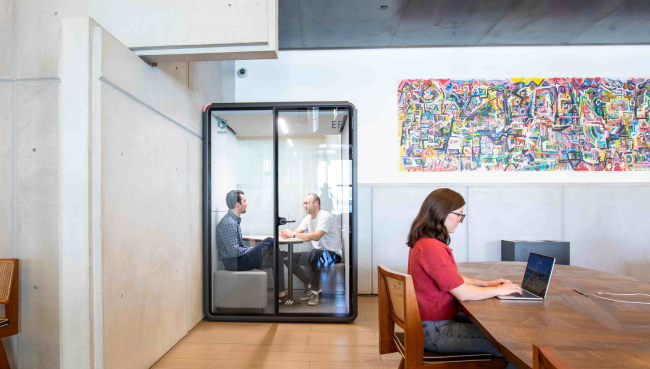
Silence at Work: Top Office Furniture Solutions That Block Noise
Anyone who has worked in an open office floor plan can tell you that noise is one of the biggest challenges in these spaces. Without the benefit of walls, these offices are filled with the sounds of people at work, including conversations, phone calls, message notifications, music, typing, and so much more. While it may feel like the cost of … Read More
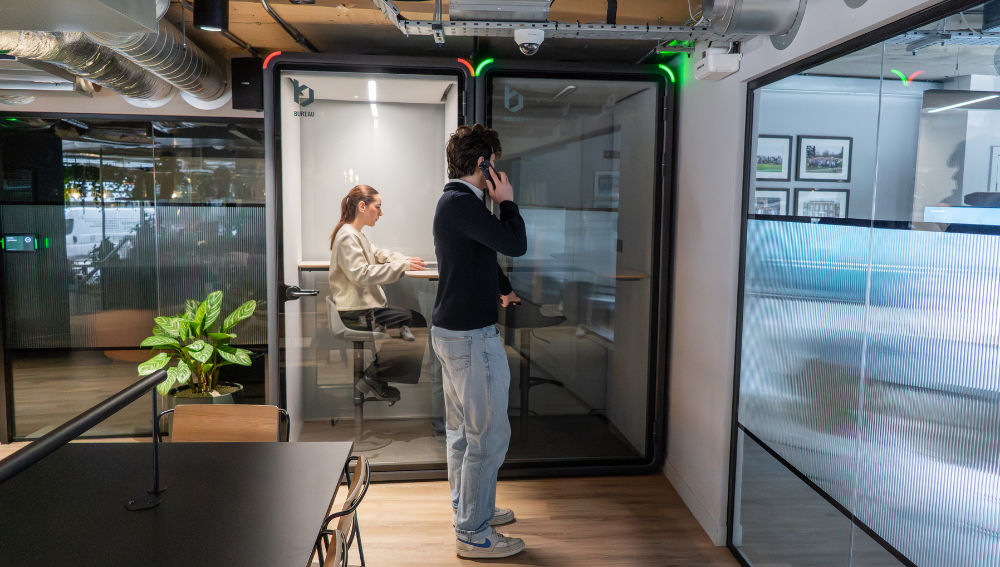
The Hidden Cost of Office Noise: How to Reclaim Your Team’s Focus
Picture it: you’re at work trying to lock in on the task in front of you. In fact, you’ve been trying to lock in on it all morning. But every time you get on a roll your train of thought ends up derailed by all that noise. Whether it’s the sound of colleagues in conversation, the ringing phones and pinging … Read More
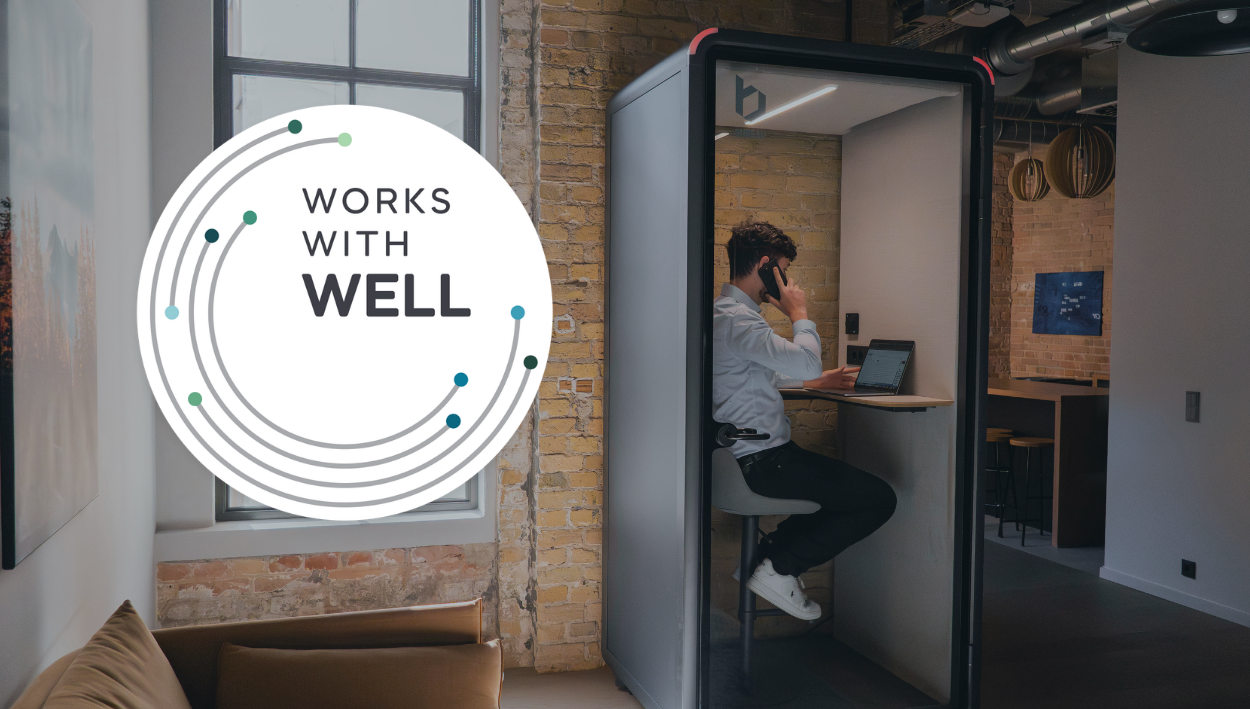
A New Global Standard: Bureau is the First Soundproof Booth Company to Earn ‘Works with WELL’
The workplace industry just reached a turning point. Bureau is proud to announce that we are the first and only soundproof booth company in the world to earn the Works with WELL licensing. In an era where employee well-being is directly tied to organizational success, the materials we surround ourselves with matter. While many claim to prioritize health, Bureau has … Read More